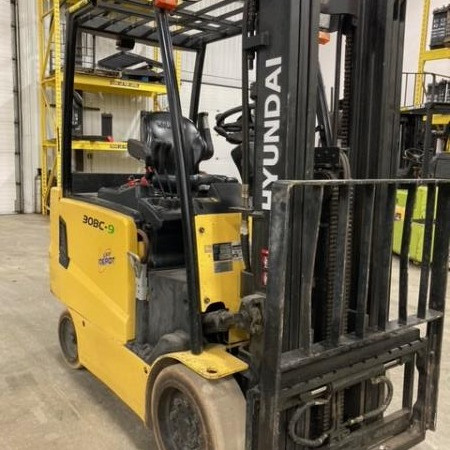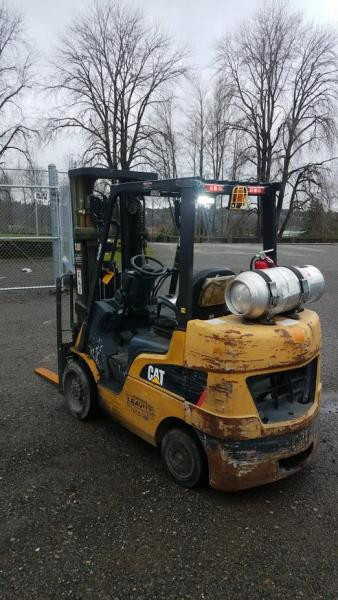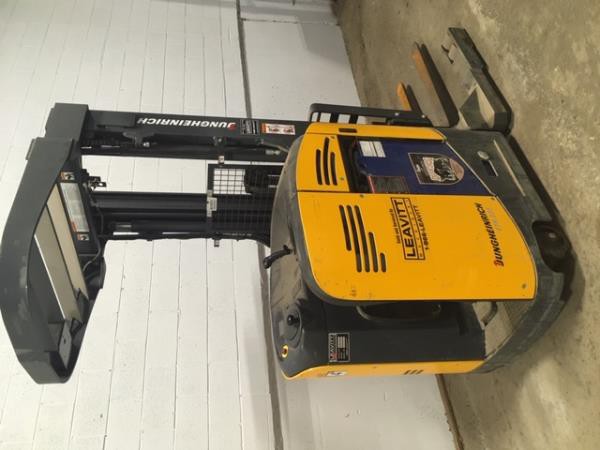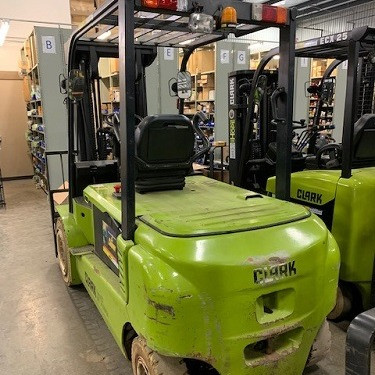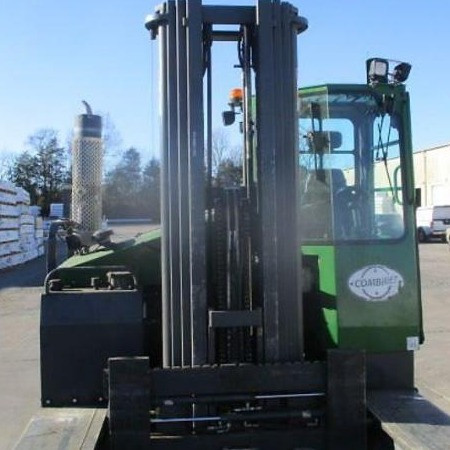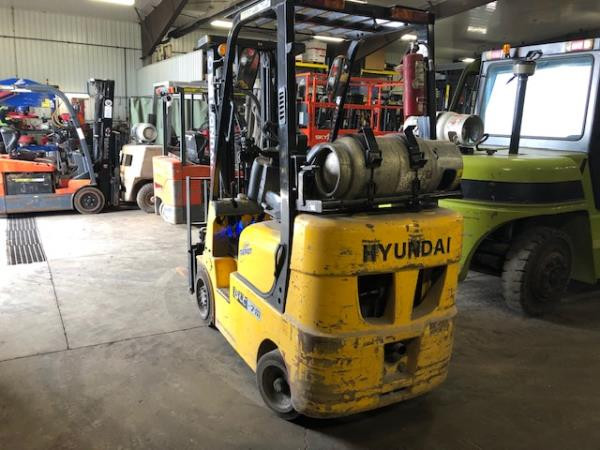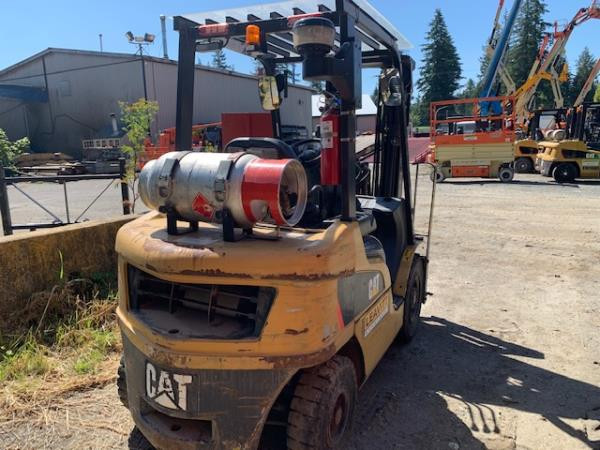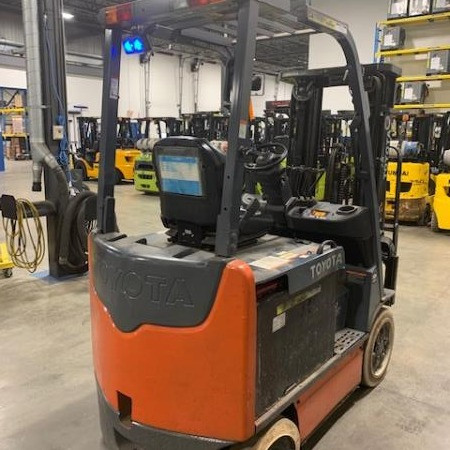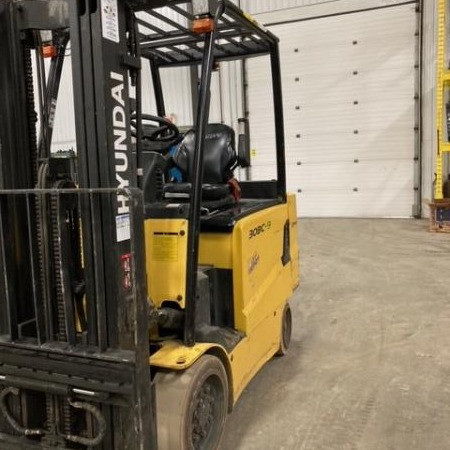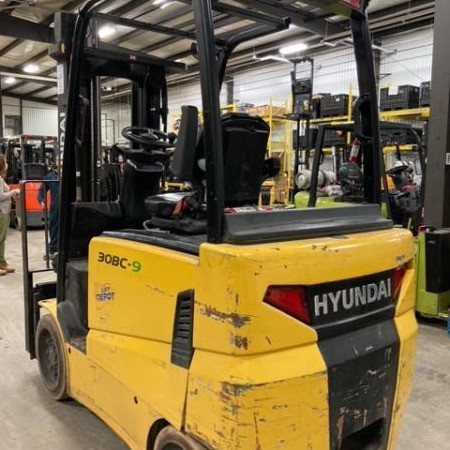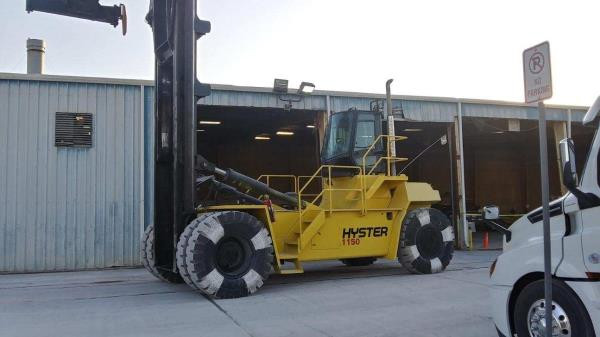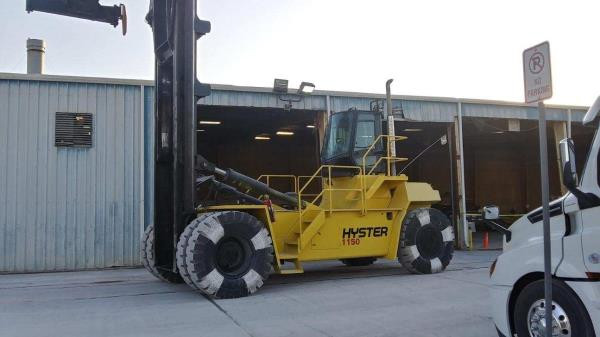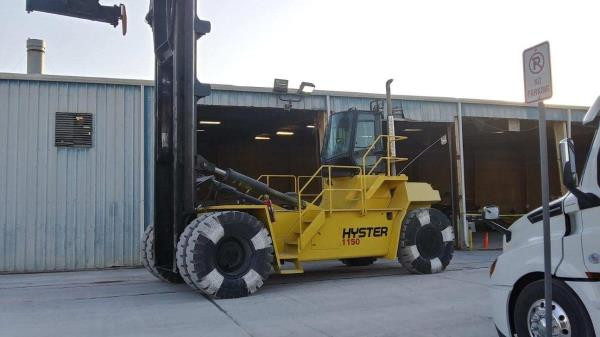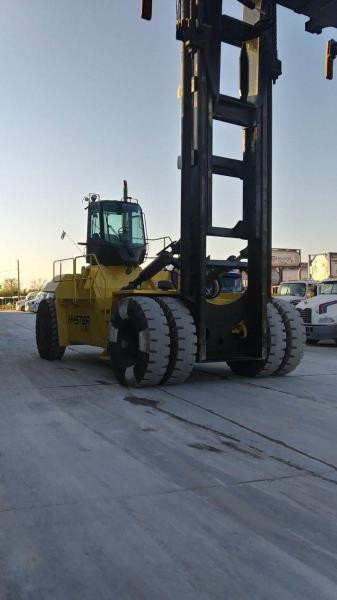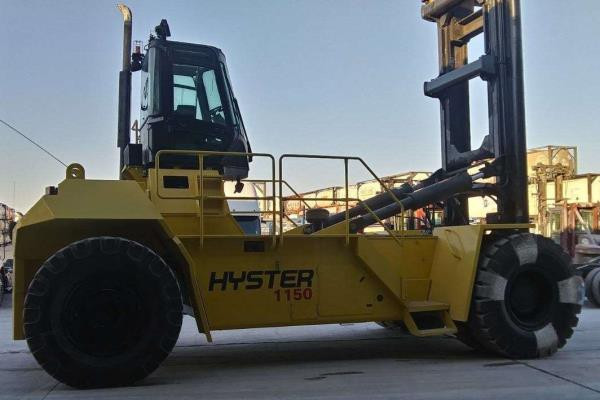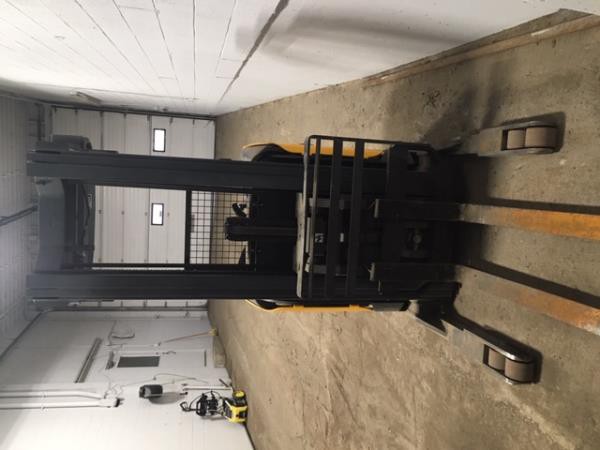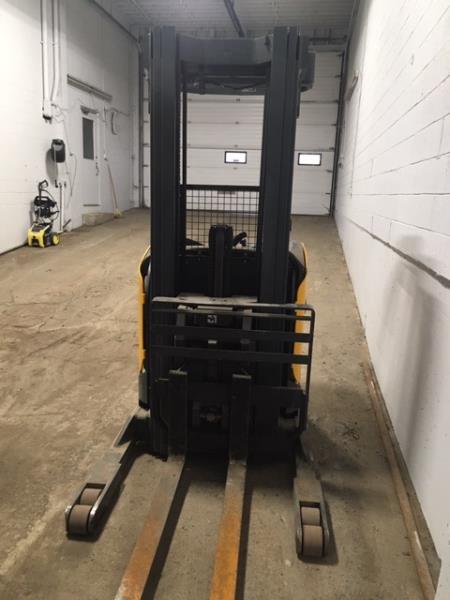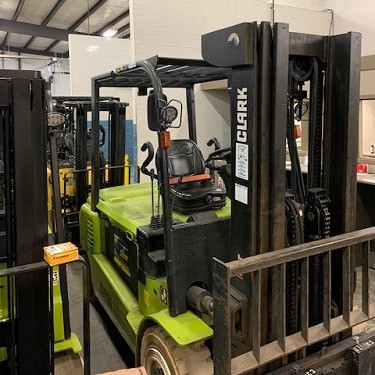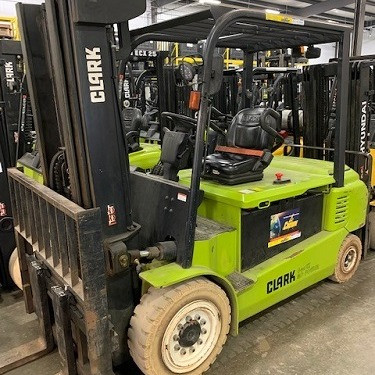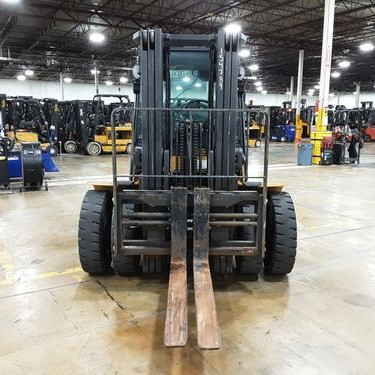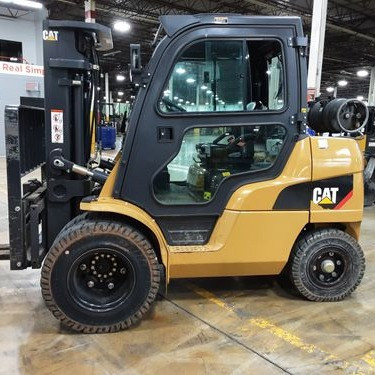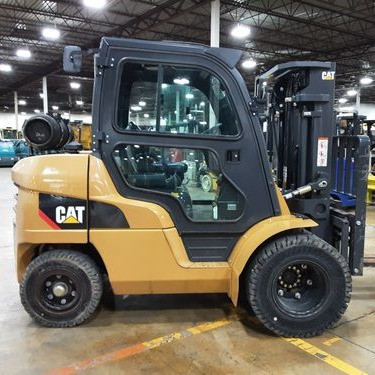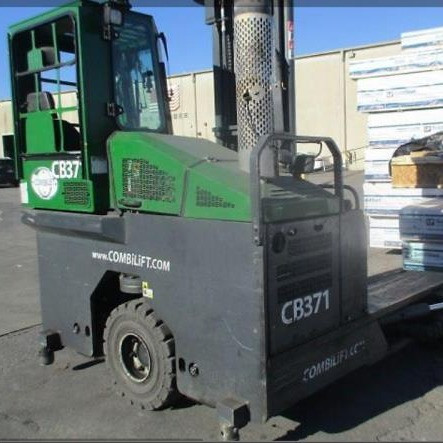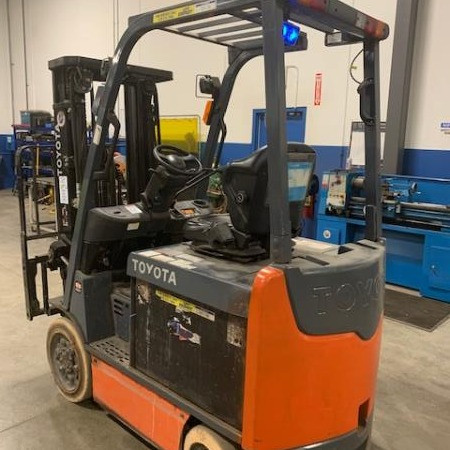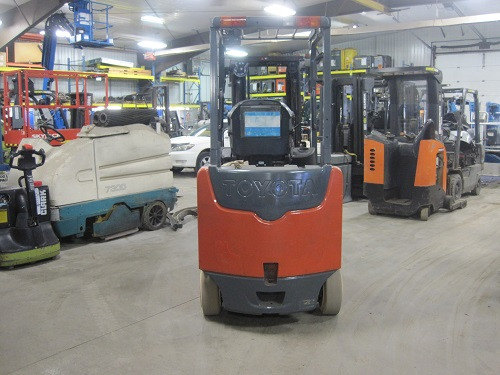


Used Forklifts Montana - Frequently utilized within warehouse operations is the Narrow Aisle Forklift. These forklifts are essential equipments in the business because their excellent maneuverability and small size enable warehouses to maximize storing space. They could easily pass aisles that are 1.8 meters wide, whereas standard lift trucks need 3.4 meters of aisle width, at least. The two types are "narrow aisle forklift" and the "very narrow aisle forklift". The first need 2.4 meters - 3 meters in aisle width, whilst the second could function in a 1.8 meters wide space. The narrow aisle forklift design includes forks positioned at right angles to the truck body. The trucks do not need to face the shelves, but instead drive straight down the aisle picking up loads to the side. This particular design feature is the key to their suitability for limited spaces. Some very narrow aisle forklifts come with wire or optical guidance systems which make sure that the forklift moves in a straight line down the aisle, that leaves the operator free to concentrate on load picking and placement. These kinds of lifts are equipped with cushion tires made from solid rubber. The hard tires perform well on smooth, paved surfaces and concrete floors. Narrow aisle forklifts have electric motors suited for applications within indoor environments. Propane-powered models are available too. For indoor use, where the quality of air is a problem, the electric forklift is the ideal machinery you can use since it produces no exhaust. Electric forklifts are clean and quiet. They are 20% to 40% more expensive to purchase compared to IC lifts, but the per-hour operating cost of electric models is a lot lower. The downside is that batteries need 16 hours to charge and cool down, so buying an extra set of batteries is recommended. Electric lifts are not limited to indoor use, but when utilized outdoors they must be utilized cautiously. Internal Combustion forklifts are for outdoor applications, and their carrying capacity is higher than electric forklifts. If your fleet usually runs on one kind of fuel, it may be a good idea to purchase an IC unit which utilizes the same kind of fuel. They could function on diesel, gas or propane. Diesel is the most economical. IC forklifts have the advantage of being less expensive to operate and easy to refuel; however, their per-hour cost to operate is higher. Nearly all IC models cannot be utilized indoors. As a international leader in forklift trucks, Hyster constantly strives for excellence in product quality and safety. However, it started as a producer of lifting equipment as well as winches. Most of its production was focused in the northwest United States and dealt primarily with the lumber and logging industry. A couple years after the first forklift trucks were invented Hyster became synonymous with quality production. Over the last 80 years Hyster has continued to expand and develop its product line. The expansion of its products coupled with its want to stay service oriented has allowed Hyster to mature into the global participant it is in the present day. In the U.S., Toyota Materials Handling inc., or TMHU, has been the best selling lift truck supplier since 1992. Proudly celebrating more than 40 years of operations, the Irvine, California situated business presents an extensive line of quality lift trucks. Resulting from their history of superiority, reliability, and resilience, Toyota remains popular in this competitive market. Quality is the keystone of Toyota’s renowned Toyota Production System practiced at all manufacturing facilities, including TIEM, which is stands for Toyota Industrial Equipment Manufacturing, located in Columbus, Indiana. The bulk of the Toyota lift trucks sold in the U.S. are built here. All Toyota's manufacturing plants within Canada and the United States comply with the International Organization for Standardization or ISO 14001 standard. The Columbus TIEM plant has been honored on many occasions for its commitment to relentless progress and its environmentally friendly systems. It is the first and only producer to offer EPA and CARB-certified Compressed Natural Gas powered lift trucks on the market. To illustrate, the Toyota 8-Series IC lift trucks emit 70 percent less smog forming emissions than the current centralized EPA standards and have complied with California’s strict emission standards and policies. Yale Materials Handling Corporation is a global association that is part of the NACCO Materials Handling Group or also known as NMHG. NAACO Materials Handling Group is the largest manufacturer of lift trucks in the USA. They have got $1.5 billion in profits, making them the third largest all over the globe. NMHG designs, engineers, makes and sells a whole series of forklifts using the Yale brand. The forklifts are made in USA, the Netherlands, the UK, Mexico, Scotland, Ireland, Brazil, Italy and Japan. The retail sales of lift trucks and replacement parts are sold, supported and serviced by Yale authorized dealers. Yale stands behind their commitment in being a world leader in the material handling business. They are extremely proud to offer a complete series of lift trucks and a lot more. Each and every one of their forklifts come with the support of the entire company. Their experienced service specialists have every choice obtainable to handle and finance your lift truck fleet. The strategically situated dealer network provides customers great flexibility and customer service.
Yale: Yale Electric Forklift Montana - Electric Rider Critical Components Motors To be able to add protective value, heavy duty industries that require industrial operations would utilize industrial grade lift trucks. The keys to these machinery are to be able to perform optimally at challenging performance levels, while also being able to perform with maximum uptime. Furthermore, Yale forklifts are engineered and built utilizing Industrial Grade Critical Components. This provides excellent productive value and fantastic economic life. These are a few of the key differences which you can depend on successfully when utilizing Yale machinery. Electric motors enable the forklift to lift and travel at the top speeds necessary for maximum productivity and throughput. AC Motors are implemented and this reduces overall maintenance costs significantly. The steering motor functionality is integrated into the hydraulic motor; this simplifies the overall system and really increases the reliability. For supreme heat resistance, motors are insulated using Class H insulation. Conventional Aisle In the current competitive warehouse setting, the main key is versatility. A forklift which can operate on a loading dock, inside of a trailer and also in conventional aisles is an invaluable machinery. Yale features the ERP-VT. This model is an electric rider, 3-wheel model that offers excellent comfort and intelligent technology. ERP-VT Productivity Enhancements Spacious Operator Compartment: The steering column tilt angle and easy to adjust seat helps to enable the operator flexibility, that could also enhance productivity. What's more, this particular unit features a low profile cowl design. Dual AC Power Drive Motors: By providing smooth directional changes, the Dual AC Power Drive Motors would help to increase the total loads transported per shift. Hydrostatic Steer System: With minimal effort from the operator, the Hydrostatic Steer System will allow for more precise steering control. Auto Deceleration System: This system is responsible to slowing the lift truck to a complete stop. This happens when the accelerator pedal is released. This function has been proven to extend the model's brake life. Extended Shift: The Extended Shift allows balance to be achieved between the extended battery shift life and high performance machinery.
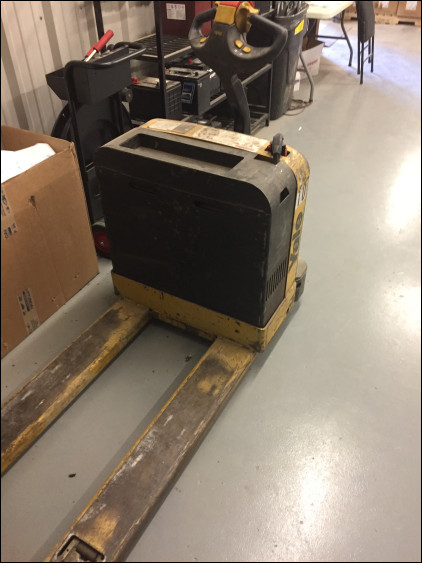
Crown: Crown Reach Forklifts Montana - In the start of the 20th Century, lift trucks were initially introduced. They have come a long way ever since the first models. Their original purpose was to transport materials in an efficient manner. This is still the main goal. There are a variety of different types of lift trucks used within the material handling business. Motorized Pallet Truck Rider Type Ride-on lift trucks are motorized types of pallet jacks. These machines are normally utilized to move pallet trucks over extreme distances, sometimes between storage areas or different departments. There is a different type referred to as the walkie version. This model lacks the operator platform and the higher speeds. Hi maneuverability and low cost make these vehicles a wise alternative for operations where frequent load movement is required. Some of the common options include double pallet length forks which enable you to move 2 pallets in a single trip. Electric Counterbalanced Lift Truck The Electric Counterbalanced Lift Truck is utilized to lift and transport products and supplies, and utilized to move load trailers and pallet loads all over a facility. This particular type has a wide array of available attachments and should have a wide aisle for turning. Internal Combustion Counterbalanced Lift Truck Electric trucks have functionality like an internal combustion counterbalanced lift truck. Propane models can be utilized both indoors or outdoors so long as there is ample ventilation. Order Selector There are man-up types of vehicles that are particularly designed for hand loading less than pallet load amounts out of and into selective rack. The VNA or very narrow aisle vehicles works in aisles less than six feet wide. These Order Selectors are also called Order Pickers. Reach Truck The narrow aisle or very narrow aisle lift trucks are used primarily for racked pallet storage up to 8 to 11 feet. Double-deep versions load pallets 2-deep in special double-deep racking systems. These kinds of reach trucks are effective and able to make racked pallet storage a more streamlined procedure.
Toyota: Toyota Propane Forklifts Montana - Toyota has an immense history of environmental stewardship within the company. This stems for the corporate doctrine of the parent company, Toyota Industries Corporation. There are not many other businesses, let alone another lift truck maker which could match Toyota's history of advancing the economy and protecting the environment. For example, Toyota has initiated an environmental accounting process that evaluates the effectiveness of environmental activities. They look at situations from the perspective of cost. This is a major aspect in corporate decision making. Toyota Environmental Policies: Toyota has earned a great reputation for its many activities which are considerate of the environment. They provide clean and safe products and follow this philosophy through use, disposal, design and production processes. The corporation is committed to further advancing corporate activities which support environmental protection. Toyota strives to strengthen environmental management, like that of consolidated subsidiaries. They also promote information disclosure and social contribution and knowledge. The corporation accomplishes this along with society on environmental protection. This is part of the company's ultimate objective of achieving a better worldwide environment for us all to breathe and live in. Toyota has always attempted to be a complete solutions provider. Their solutions are wide ranging and cover a really diverse variety of lifting requirements. The corporation has sought out a variety of industrial machine solutions to enhance the overall material handling process and enhance the end-user experience. Integrated Scale The new Toyota legal-for-trade integrated scale allows operators to simultaneously transport and weigh loads. This results in reduced logistics costs and increased effectiveness. Toyota has developed an industry exclusive scale-mounted fork positioner alternative which allows operators to quickly and precisely position the forks without having to leave their seat. AGVs or Automated Guided Vehicles These machinery offer clients with a range of advantages including: continuous operation, higher overall productivity, improved process flow, and reduced product damage. These vehicles are also recognized for improving process flow and reducing non-value-added activity. Fleet Management Toyota's Fleet Management Solution surpasses simple aspects of reporting. This revolutionary technology instead analyzes your fleet to make the proper recommendations for delivering a lean fleet. This lean-thinking approach helps to ensure that customers receive utmost fleet performance at the lowest cost of ownership as possible. This is another effective way that Toyota goes above and beyond for their customers.
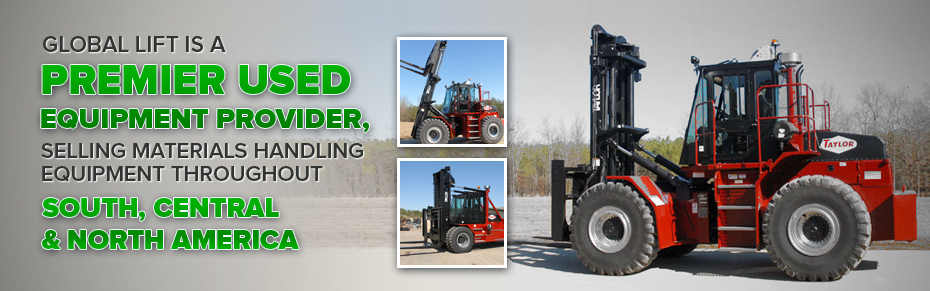
Taylor: Taylor Rough Terrain Forklift Montana - Rough Terrain Lift Truck Training Rough terrain or Class VII forklifts are usually used in forestry and logging projects and are common on construction sites. They are the popular choice for outdoor conditions that rely on a vehicle to run on uneven ground. The Occupational Safety and Health Administration or OSHA states that drivers should receive lecture or classroom style training as well as supervised driving training. Regular refresher training programs are taken by the drivers in order to keep them in top form. Classroom or Lecture Training When learning to drive a rough terrain lift truck, the first step is taking classroom type of instruction or lecture. This training consists of information regarding the machine which the driver would be utilizing. Specifics like for instance how to refuel the forklift and lifting capacities are talked about. Safety tips are really essential to understand before operation. OSHA does not place a minimum time requirement on classroom training, however, they do state that oral and written exams could be part of the training process. Supervised Driving Supervised driving is the next step in the rough terrain lift truck training, quite like when drivers learn to drive a passenger car. The operator has to learn how to operate the particular kind of rough terrain forklift that they would drive in the workplace. Furthermore, they should practice operating this type of forklift in an environment which closely replicates the situations in which they will be driving. Several of the other conditions covered in training comprise handling pedestrians, structures nearby and vehicle traffic. Certification The supervisor can certify the driver for that workplace after a supervisor determines whether a driver is capable of safely driving a rough terrain forklift. The certification for the operator could be kept in their personnel file. If the training is to be taken in a 3rd party training facility, the trainer hands the operator the certification. As work environments vary, the certifications are not transferable; thus, drivers should be re-certified again in the new environment. Typically, training passes faster after the operator has been certified the first time. The safety concerns connected with operating a forklift are extremely important. It is important that operators stay alert and drive with utmost care and attention. Practicing good habits can really save lives at the end of the day. Additionally, much less damage to the work environment, the machine itself or the goods happens when drivers are working at the top of their game.
TCM: TCM LP Forklifts Montana - Propane Tank Rules The gas container, LP System or liquefied petroleum system is a collective term by OSHA which refers to the piping, regulators, hoses, regulators, fittings and valves. Depending on the capacity of the tank, the agency needs particular parts. These individual parts should go trough recognized laboratory testing. The correct laboratory approval will show that the system parts meet thickness, construction and pressure standards. Tank Location The organization OSHA determines how near the propane tank can be mounted in relation to ignitable materials, to buildings, to tanks that contain inflammable liquids, cutting torches and welders. These strict regulations are implemented to make the jobsite very safe for the employees and those others who are in close proximity. Nameplate Marks Liquefied Propane systems need to be marked with the name and the address of the container supplier, or tank trade name. The capacity of the container is listed in pounds or gallons, square foot outside surface, pressure and fill level. Moreover, information about whether or not the container is designed to be installed underground or above ground is also visible. These markings should be on a metal plate attached somewhere noticeable to the container. OSHA requires that every tank must be marked by the Pressure Vessel Inspectors and National Board of Boiler so as to be considered safe and ready to use. Tank Modifications and Repairs Any repairs to LP systems that require welding are regulated by OSHA. Repair personnel and tank owners need to be familiar with standards and regulatory codes that the tanks were made. Welding repairs to any part of the system that is subject to internal pressure should first comply with these fabrication codes. Any other kind of welding is just permitted on brakctes, saddle plates or lugs. OSHA has worked hard to make sure that people working with forklifts and those working nearby lift trucks are kept as safe as possible. They have strict training procedures and regulations in place in order to make certain that these industrial machinery and their repair processes are handled with respect and as safe as possible. It is very essential that businesses follow their rules and steep fines can happen if they are not adhered to.
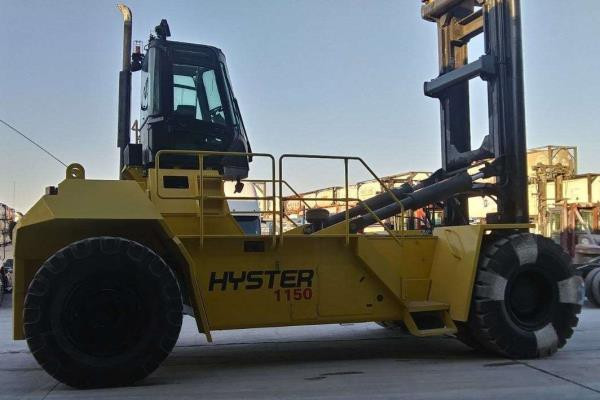
Hyster: Hyster Electric Forklift Montana - Hyster prides itselves on offering excellent material handling products which are reliable and dependable machines that have low long term ownership costs. We also offer ongoing service for your machinery to keep them running effectively. Because of their simplicity compared to a conventional DC motor, Hyster has transitioned to the AC pump motors and traction. When used in a normal working environment, the AC motor's periodic maintenance intervals could be up to 500 hours. There is no need to service brushes, motor commutators or brush rigging and there is no sparking, maintenance or arching. Additionally, when compared to DC motors that give equal output, these motors develop lower temperatures overall. Hyster AC traction and pump motors offer better speed capabilities, thermal performance, continued reliability and more torque. Hyster Vista masts are top of the industry masts which are made of solid steel cast cross members and have a big window for greater visibility. They feature the nested channel design and have full-face straight load rollers which are canted at three degrees. Furthermore, brass side thrust plugs allow the driver to make adjustments to the mast easily during maintenance without having to disassemble or remove the mast. The Vista mast is designed and built by Hyster to precise specs. Featured on our lift trucks is the most dependable steer axle within the business for hydrostatic steering. We have built ours to be both dependable and durable, requiring no or little maintenance. For more safety, the Operator Pre-Shift Checklist requires the operator to answer certain questions to make sure that the model has been checked before use. This is an optional feature that means the lift can be programmed not to start if the checklist is not completed or if there is a problem which requires attention before lift operation.
Caterpillar: Caterpillar Stand Up Forklifts Montana - Responsibilities of a Forklift Operator Forklift drivers are employed within warehouses and factories to be able to move supplies from one place to another. Operators require specialized training, that is usually offered by the workplace. Prospective operators must pass both a background check and a drug test. Performing Inspections Performing functionality and safety checks on a daily basis is part of the various responsibilities of a forklift driver. The Occupational Safety and Health Administration mandates that all types of forklifts be checked before utilizing them. The driver should check the forklift again at the end of the shift. Annual safety training is truly an essential part of a forklift driver's job description. Unloading and Loading Forklift operators use forklift controls to load and unload materials and to stack things efficiently and in a timely method. Weighing Materials A forklift operator's duties comprise weighing the supplies they are moving, and logging the weights. Quality Control Quality control is one more vital part of the forklift driver's responsibility. This includes making certain that orders are right and making certain the supplies do not sustain damage during the moving process. Battery Maintenance and Care Caring for the forklift battery helps guarantee a long life span for the unit. Maintenance and care procedures include inspecting the water level within the forklift battery about every five charge cycles, filling the cell to just over the visible protector, being careful not to overflow the water, and cleaning up any spills. Once a battery is charging, never interrupt the cycle. PPE: Personal Protective Equipment Personal Protective Equipment is essential when performing work on the battery, like checks of water levels. Both hand protection and eye protection should be worn, and a fire extinguisher and acid spill kit must be on hand. Forklift drivers should observe safety rules at all times. The charging place should be kept ventilated and clear of open flame.
Kalmar: Kalmar Diesel Forklifts Montana - When it comes to both industrial and container handling applications, Kalmar is a real expert. They completely understand how to keep cargo moving smoothly and how to handle it altogether. With every step, these machines should work dependably without compromise. It all begins with performance and keeps going well beyond the operating surroundings. Kalmar for this reason, works really hard to stay at the cutting edge in developing and engineering new and innovative products. Intelligent systems solutions are really promoted throughout the company. Kalmar has applied a global approach which makes their customers more efficient in this extremely competitive and global field. Added value has been continuously created adding value by implementing various new approaches in long-term relationships with their clients. Handling empty containers is a fast-paced job because containers have to be stacked and moved quickly and effectively. These containers should be stacked high and close together in order to maximize the existing land area to the maximum potential. As the land area gets more valuable, it is vital to have high stacking combined with reducing and minimizing ground space. Kalmar fulfills both the conditions of fast and efficient stacking and the minimum ground area. The 2 empty container truck ranges comprise the Kalmar straight mast empty container handlers and the Kalmar empty reach stacker. Kalmar has taken their time to build really innovative and efficient equipment in order to offer their customers with a many great machinery. Clients will be rewarded with a comfortable operating setting, extreme durability and equipment which is engineered and built for even the most intense environments. Kalmar is really committed to providing all their customers with several of the safest, most comfortable and most efficient material handling machines within the business. Operators', who are comfortable in their cabs, are likely to be more productive overall and Kalmar wants your business to be successful.
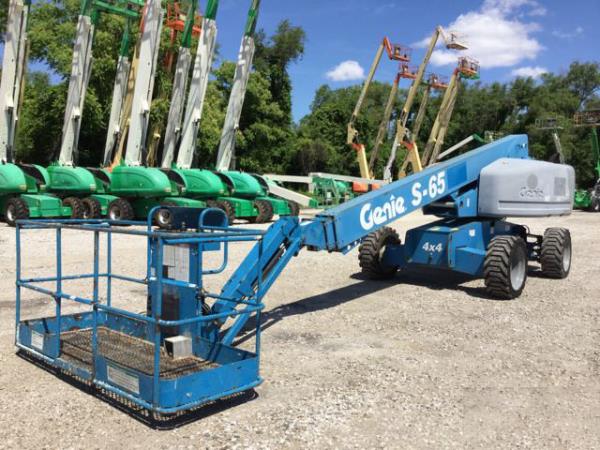
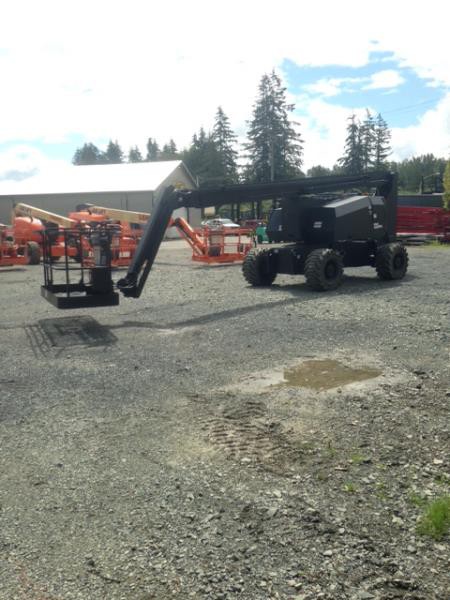
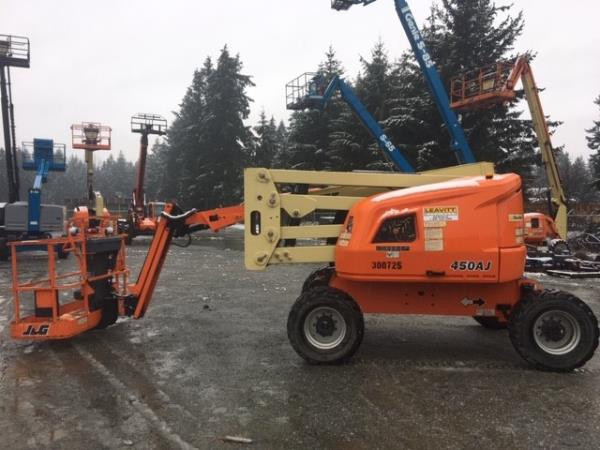
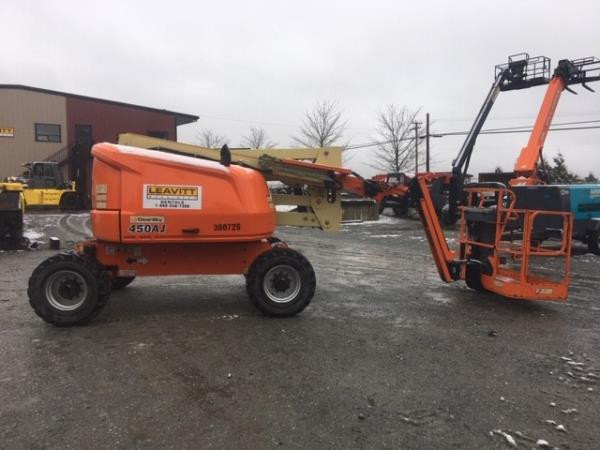
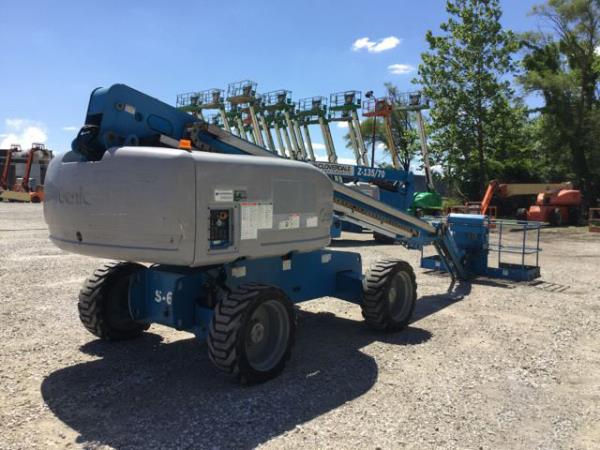
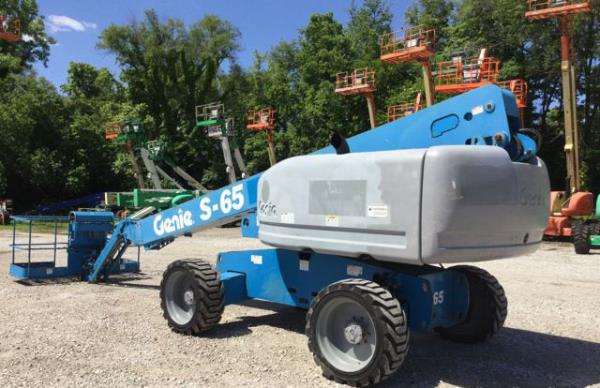
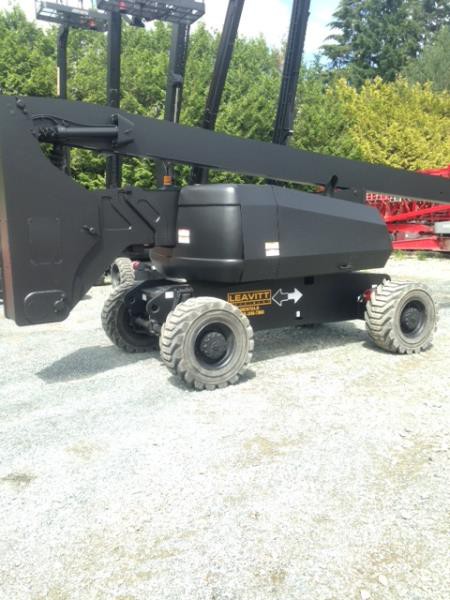
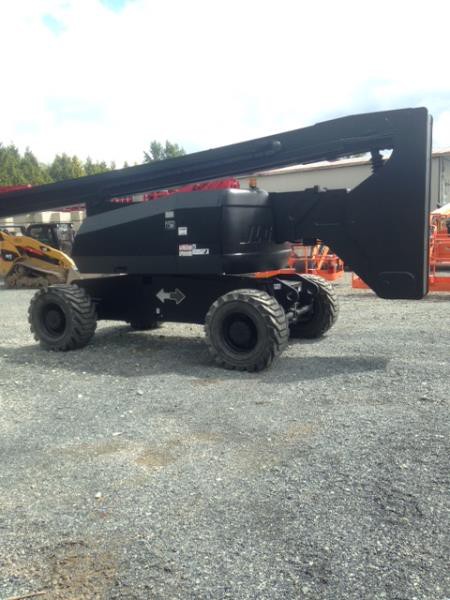
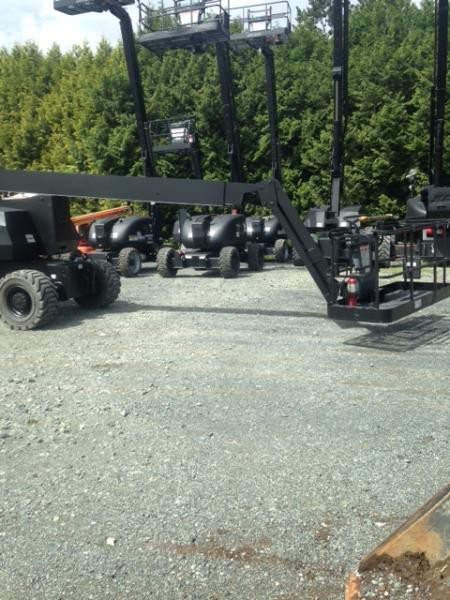
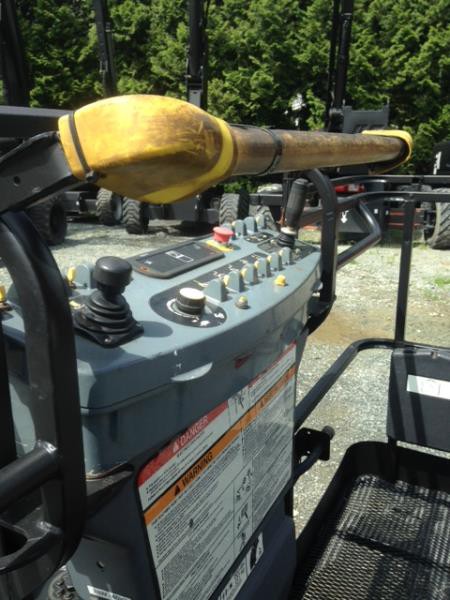
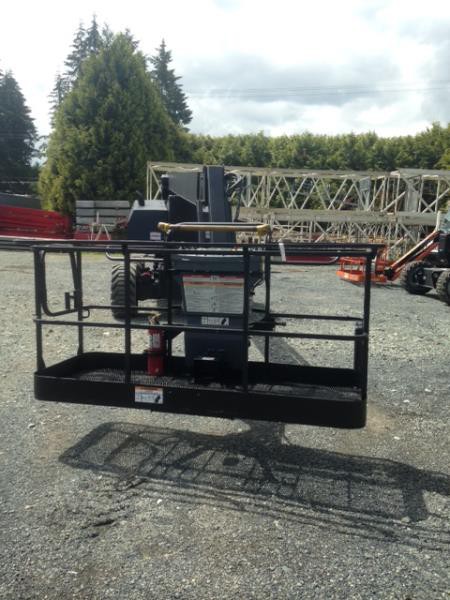
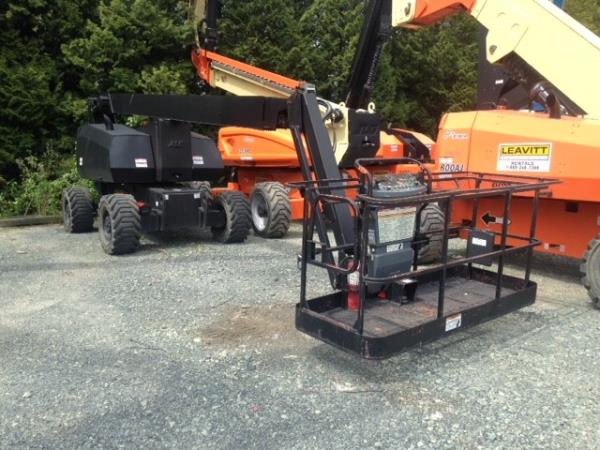
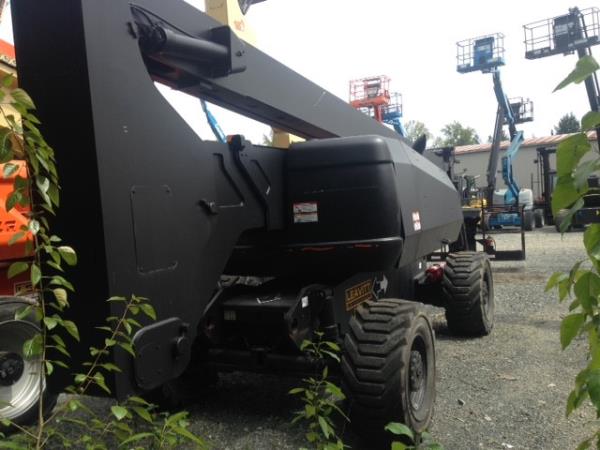
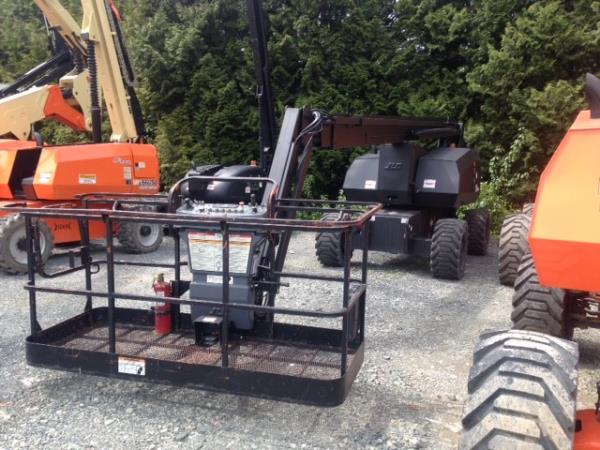
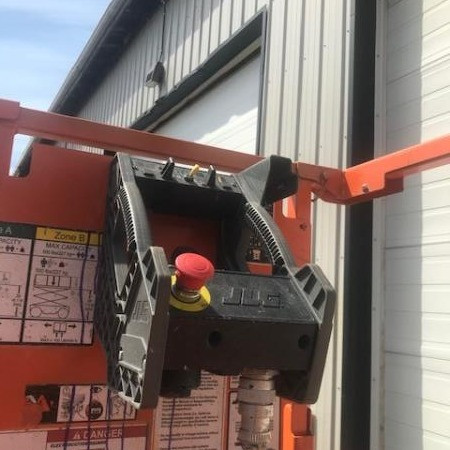
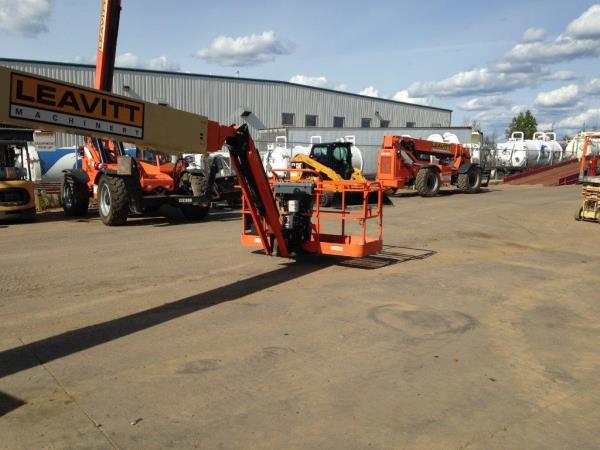
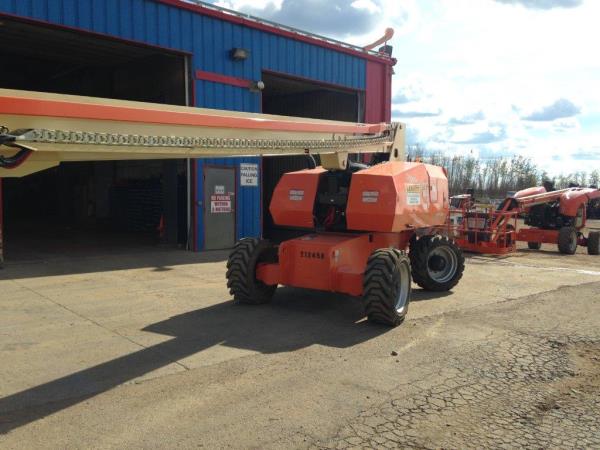
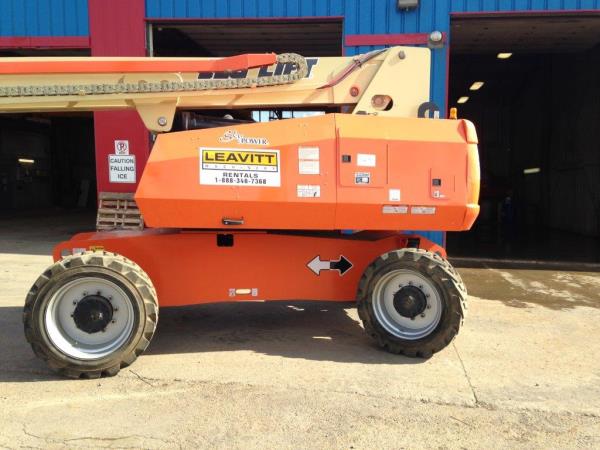
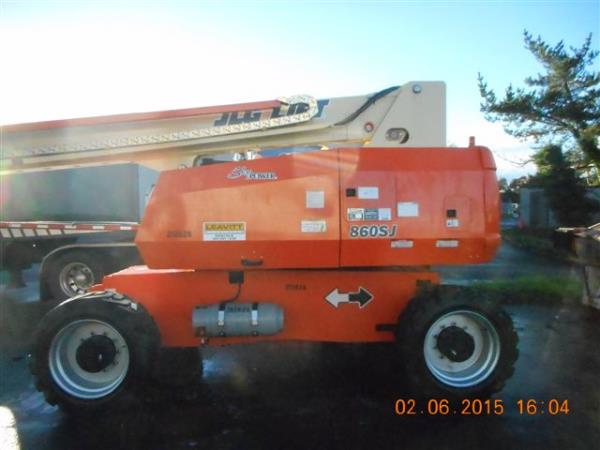
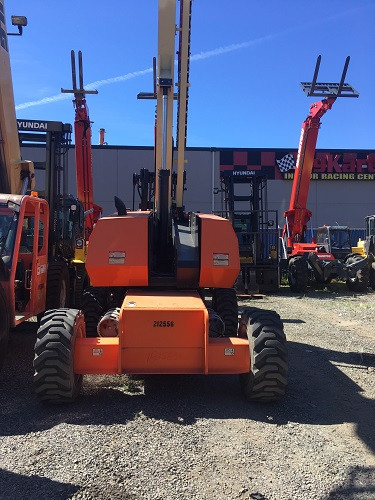
Snorkel: Snorkel Man Lift Montana - The Advantages of Using a Man Lift Man lifts provide an easy and safe method to fix problems at areas that are very high to reach by other ways. Mechanical lifts allow personnel to lift safely to an elevated work place. Normally, man lifts are utilized by construction and service employees to complete work on buildings, light poles and other areas which are very up high to reach by other ways. Safety Taking safety into account is the major factor when operating a man lift. Ladders are not a viable option for great heights and thus man lifts are the best option for these kinds of areas. Most of these machinery are outfitted with emergency shut-off switches and safety rails to make worker safety a main concern. Range Man lifts could reach certain heights that other machines cannot reach. This machinery was initially used to pick fruit, but has evolved to take on other jobs. Like for example, they are commonly utilized to do finishing work in the construction industry and changing light bulbs. Usually, man lifts are capable of reaching heights of roughly 20 to 100 feet. Some man lift models are small enough to be brought indoors in order to raise personnel to complete finishing structures in places like large office buildings, hotels and sports arenas. They can be powered with electricity. This eliminates the harmful fumes and their associated hazards. Engine-Powered Boom Lifts If employees need to be transported to their height destination quickly and efficiently, an engine-powered boom lift is the solution. Boom lifts offer a wide range of mobility. These machines can also be moved in a variety of directions. Boom lifts can easily fit between narrow spaces as well. Each "joint" in the boom lift is controlled to adjust to various heights to be able to position the worker exactly where she or he must be to be able to get the task completed. The engine power system is what allows boom lifts to reach their full elevation quickly. Firefighters often utilize engine powered boom lifts when they have to rapidly ascend to heights during a rescue mission.
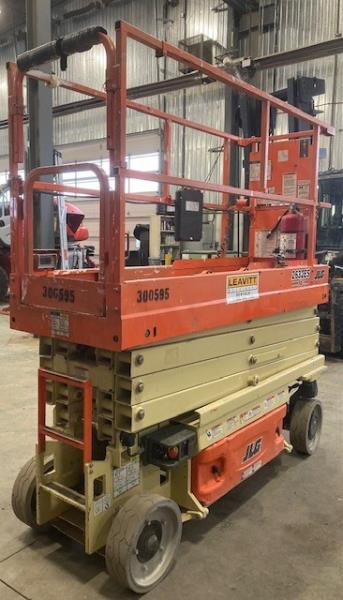
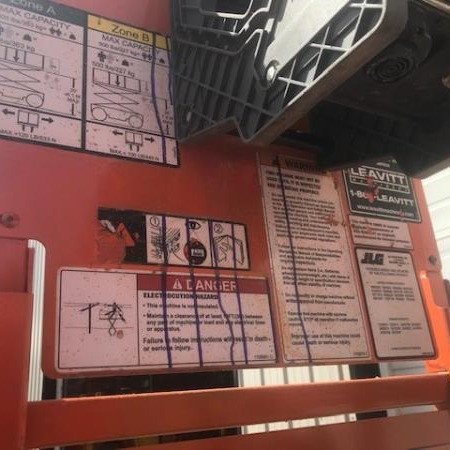
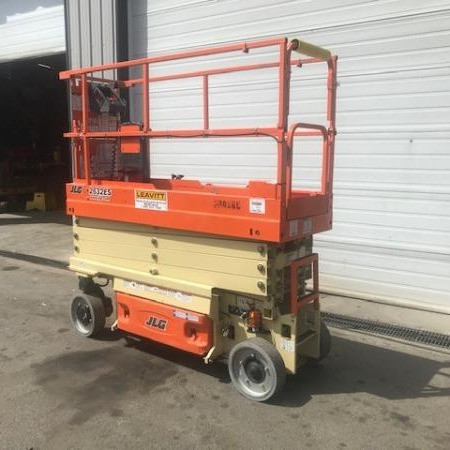
MEC: MEC Rough Terrain Scissor Lifts Montana - Negative Effects of Scissor Lifts A scissor lift is a specific kind of mobile scaffolding. This wheel-mounted equipment gives power to a work platform that moves up and down. The lift could be powered by propane, electricity, gas or diesel. Scissor lifts are characterized by various scissor-like joints which raise the equipment by collapsing and expanding. A lot of safety features are built into scissor lifts these days, especially the newer models. As with any safety features, they may not be able to guarantee safety and several features can sometimes malfunction or they can be manually overridden by operators. Accidental Elevation Construction workers usually utilize scissor lifts to work at higher heights. Workers can hoist the work platform to just below the ceiling level. The issue with accidental elevation could occur if the workers inadvertently bump into the elevation controls when working. In the ceiling scenario, the controls might be accidentally activated and the platform can rise up and inadvertently crush them into the ceiling. Electrocution Another way employees need to be very cautious is to be sure they know the surroundings they are in while using the machinery so as to make sure they don't unintentionally electrocute themselves. If, for example, an operator makes direct contact with or accidentally touches an induction field or an electrical conductor, tragic consequences could happen. Lateral Loads It is essential to know the loading limitations while utilizing the scissor lift. These limitations would be labelled in the scissor lift handbook. Mis-loading the platform can result in very terrible consequences. A lateral-load is amongst the potential issues that can happen if the entire lift overturns. This situation takes place when a heavy material or tool like a concrete slab which hangs over the side of a scissor lift platform, causing the entire equipment to become unbalanced at once and really susceptible to tipping over dangerously.
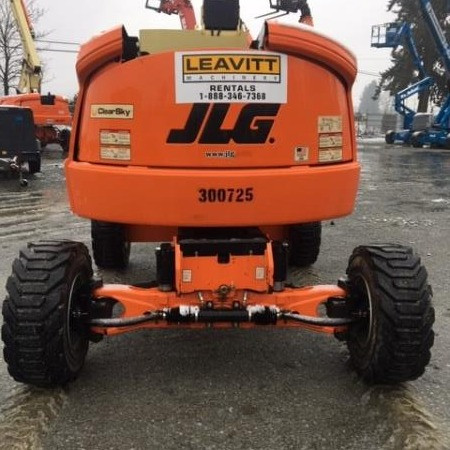
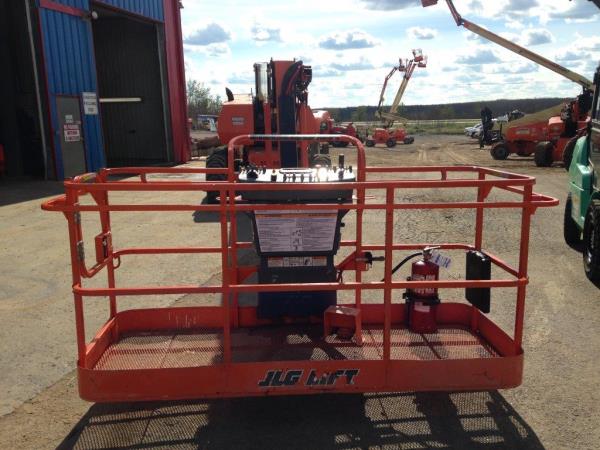
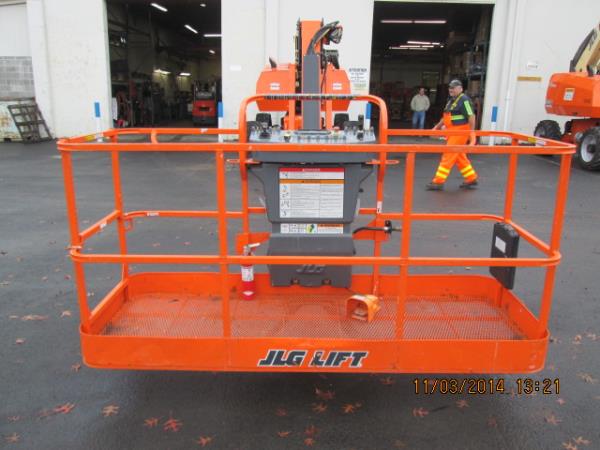
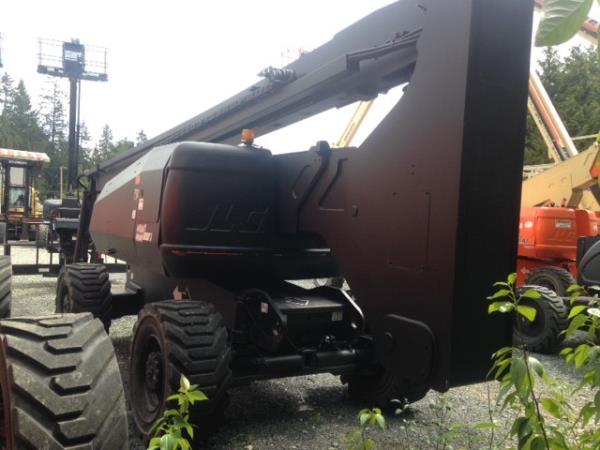
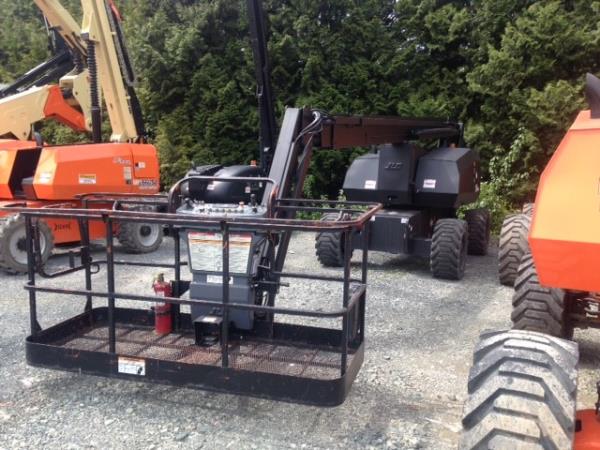
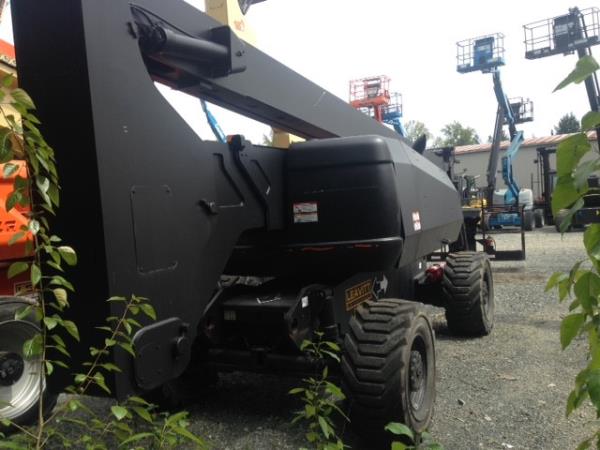
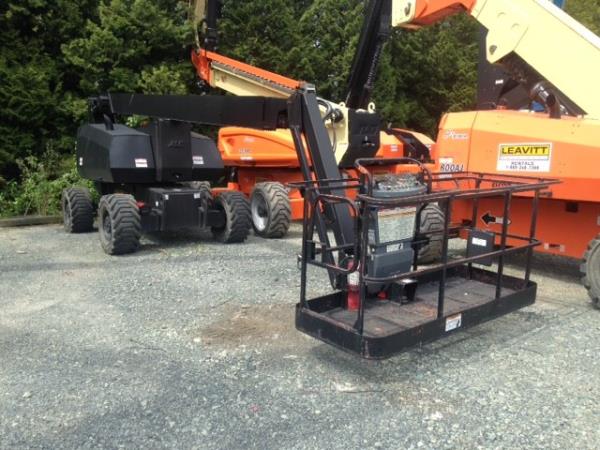
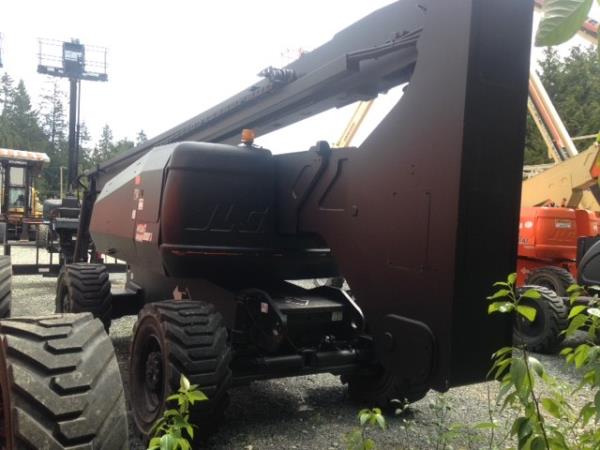
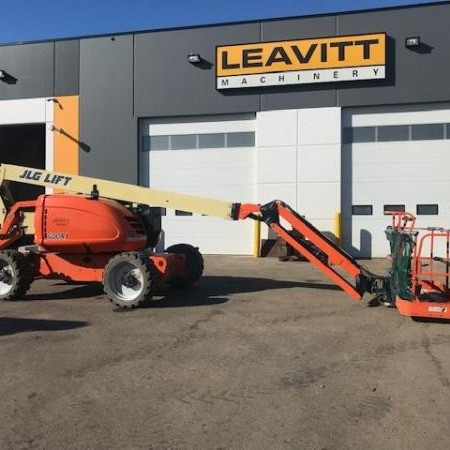
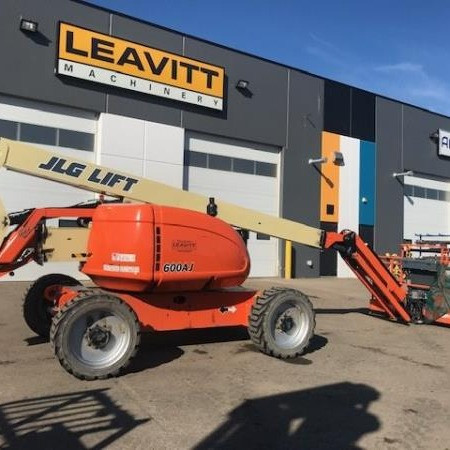
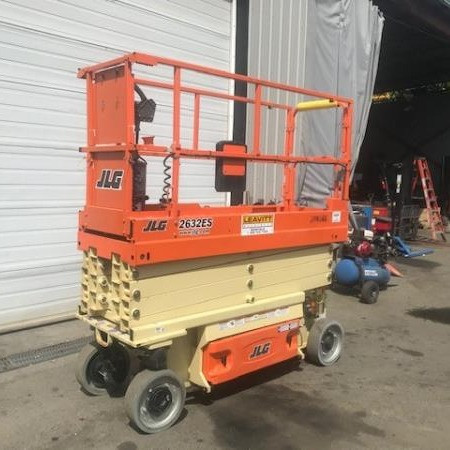
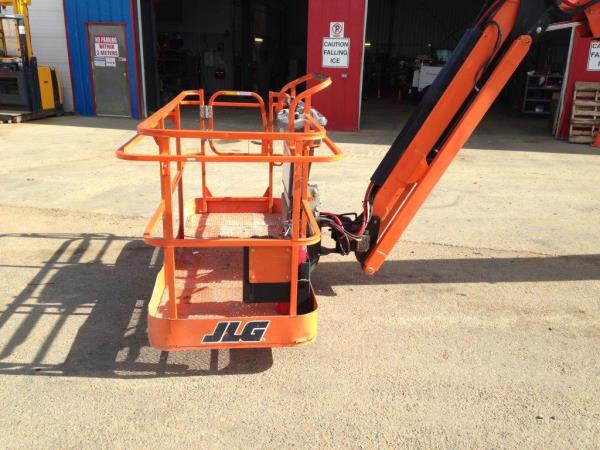
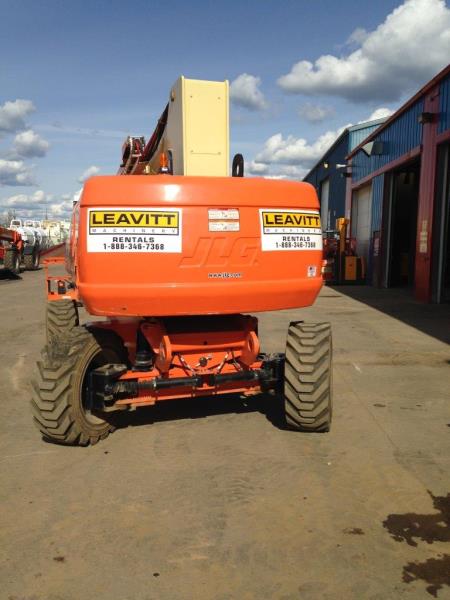
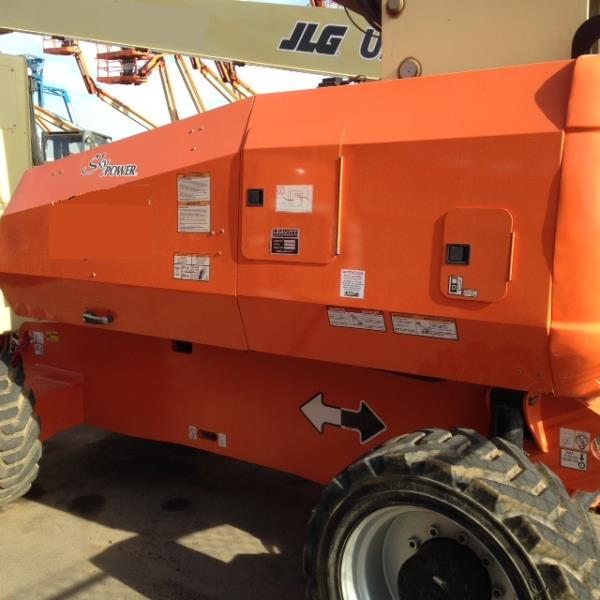
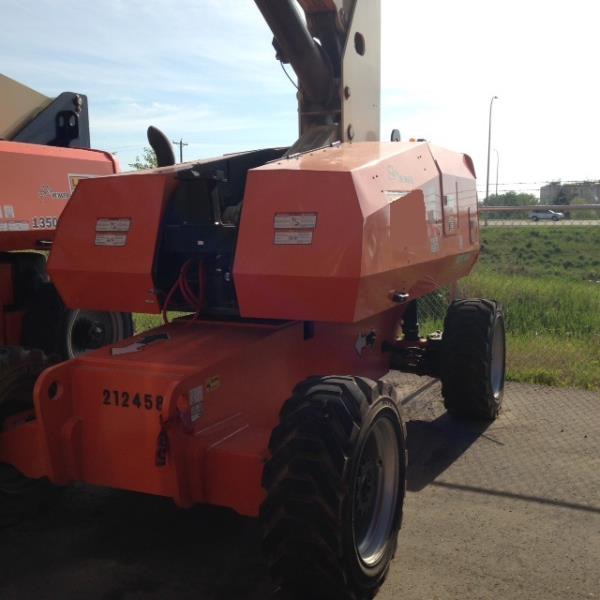
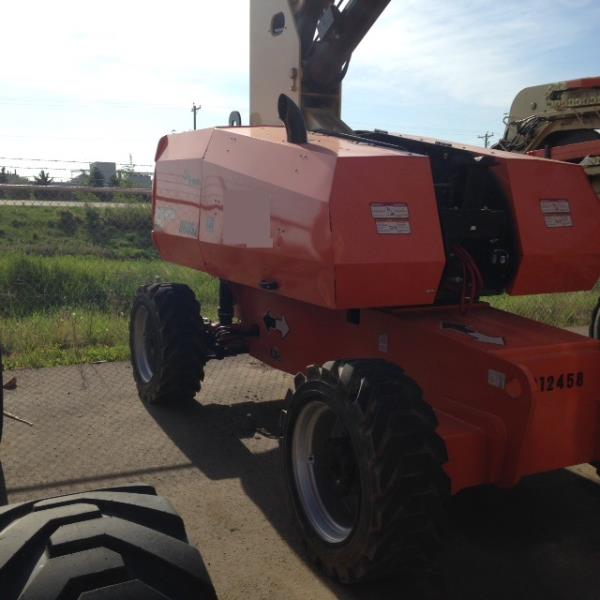
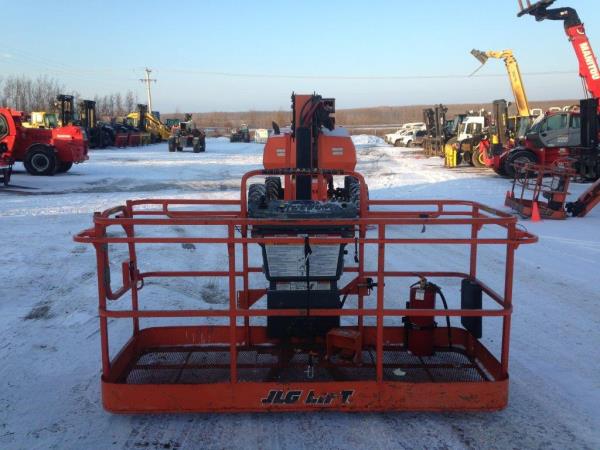
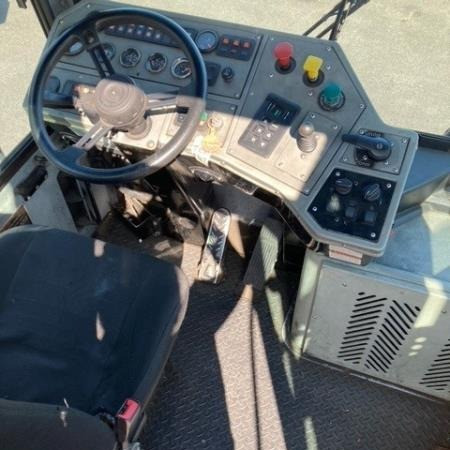
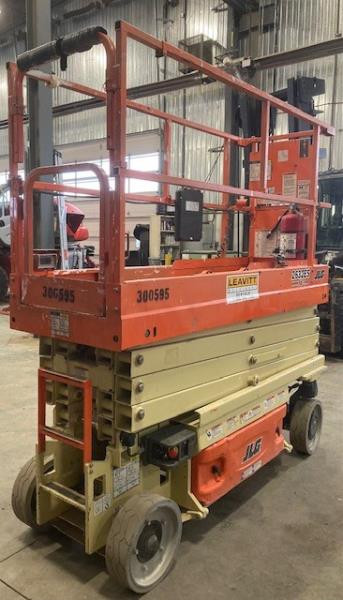
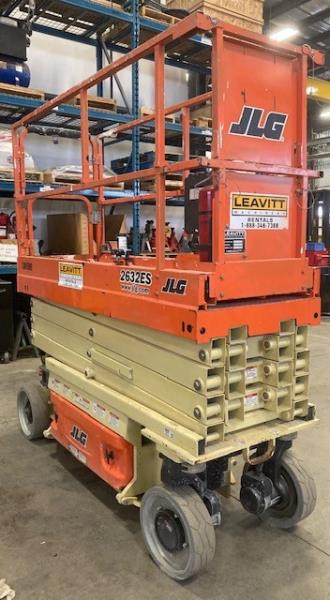
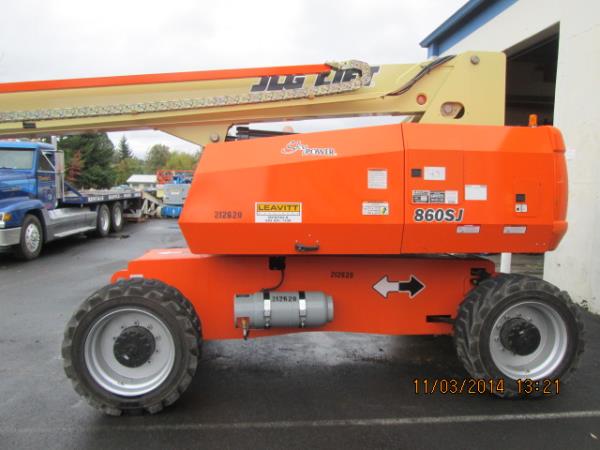
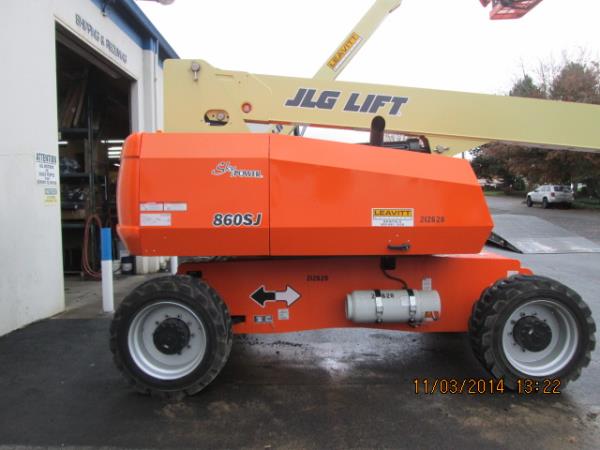
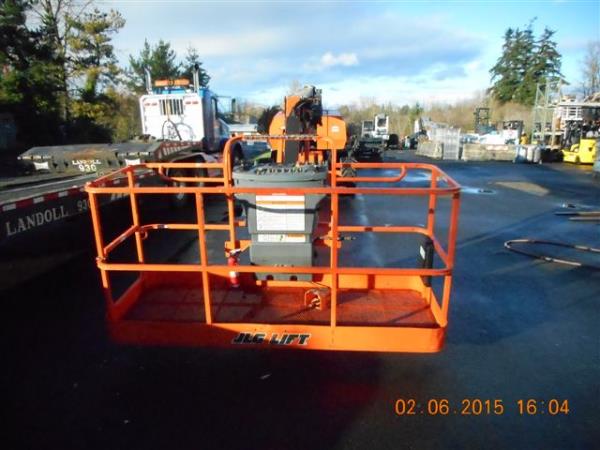
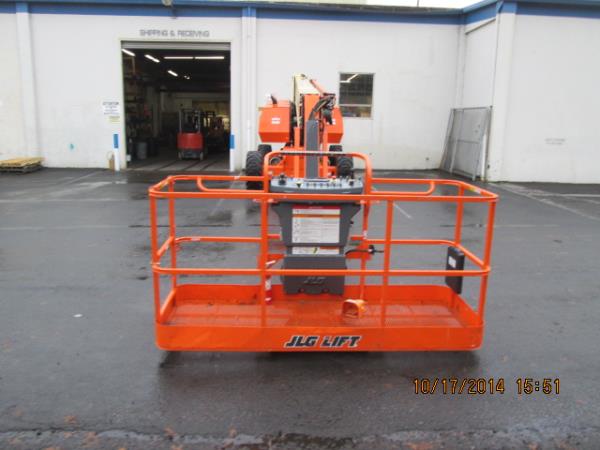
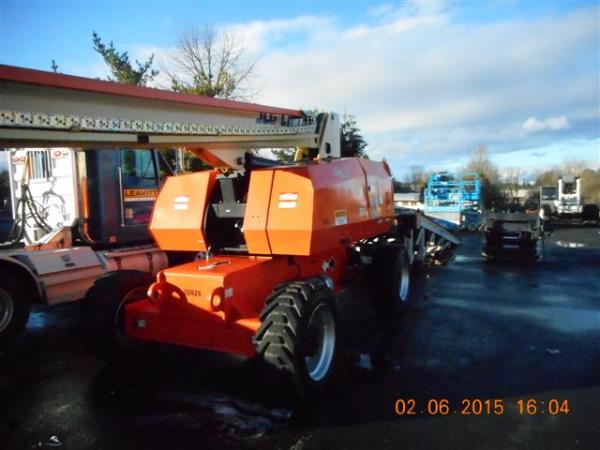
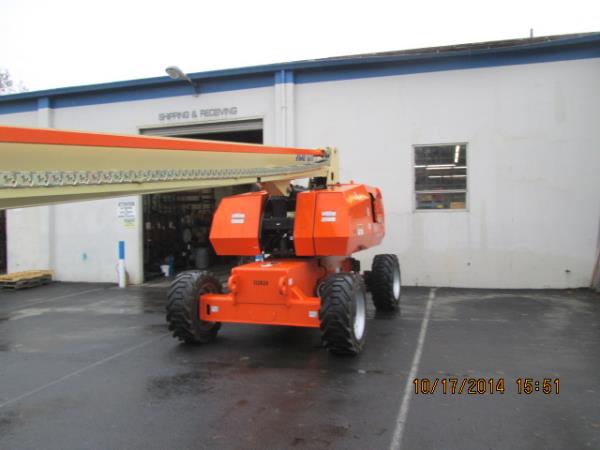
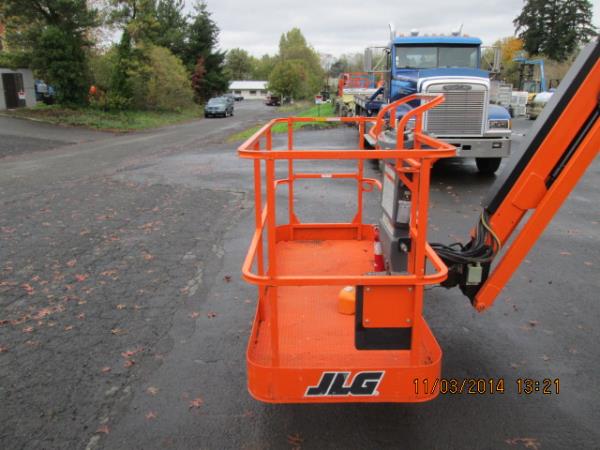
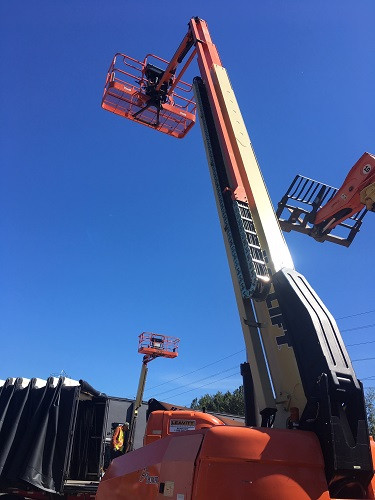
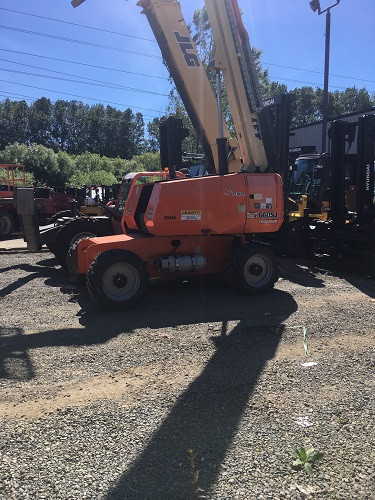
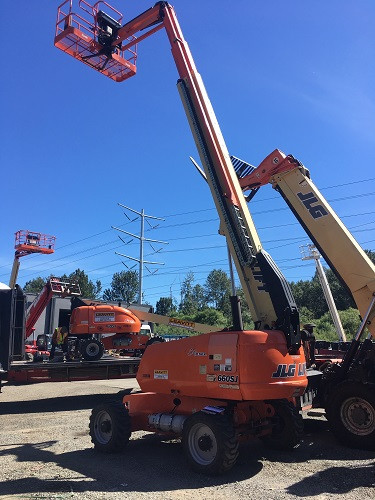
JLG: JLG Aerial Work Platforms Montana - JLG aerial work platforms could get the job done, whether you are lifting from 10 feet to 150 feet. JLG offers more than 50 different models of boom lifts, mast booms, vertical mast lifts, and scissor lifts in order to meet any of your personnel lifting needs. You can be more efficient and productive than ever, with factory designed accessories. JLG's founder, John L. Grove, made the first self-propelled boom lift in 1969 and ever since that time, has been working constantly to find ways to make your job simpler and safer. Vertical Mast Lifts JLG understands that your work needs differ quite a bit during the day, each and every shift. From painting, eletrcial installations to routine maintenance, duct work, plumbing, signage and putting up holiday decorations, JLG offers the most selection and the option in vertical mast lifts. JLG offers the AccessMaster push-around vertical mast lifts and the self-propelled JLG mobile vertical mast lifts which are drivable at full height, the company has various models available. Choose a JLG lift equipment and increase you productivity with a best-in-class lift. Leave the ladder for other people and choose security and safety with an aerial work platform. JLG LiftPod Work Platform Safety is the biggest factor for any task. The safer a person's work environment is the lower your expenses and the higher your productivity. It is a well-known fact that it only takes one accident for extra work and fines to pile up. You can focus on the task with a LiftPod aerial work platform and would not have to focus the danger of the task. There is an enclosed carriage and a secure platform on the LiftPod aerial work platform. These features can help keep you stable as high as 14 feet. This work platform provides a 360-degree range of motion to be able to utilize both hands so that you could complete the job in a timely manner. The LiftPod has been designed and engineered to be portable that means that your next task is never very far away. There are many reasons that JLG Aerial Platforms have become famous within the business. These types of machinery have earned a solid and positive reputation for being both safe and efficient to use, while being comfortable for the operator. JLG has become the leader in the material handling industry all around the world.
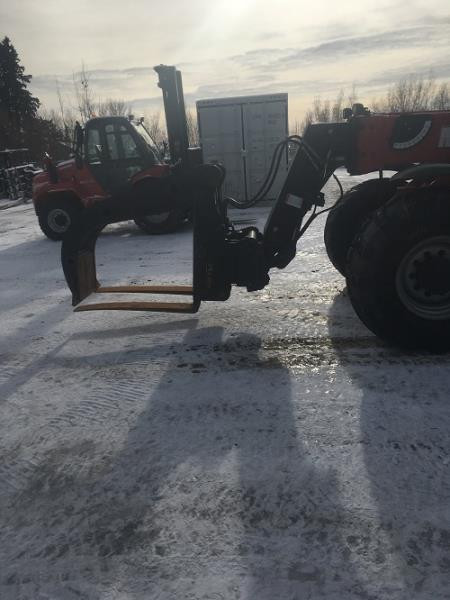
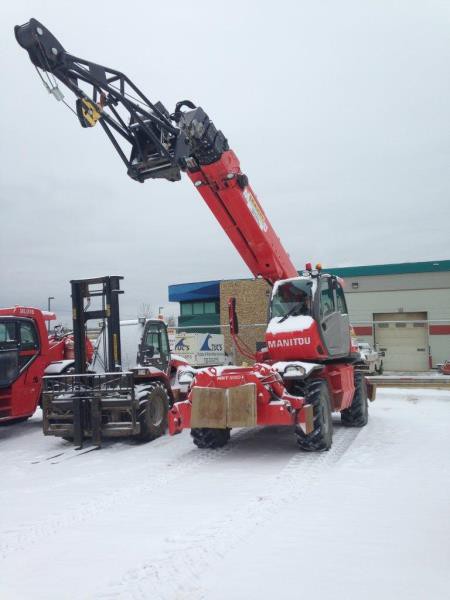
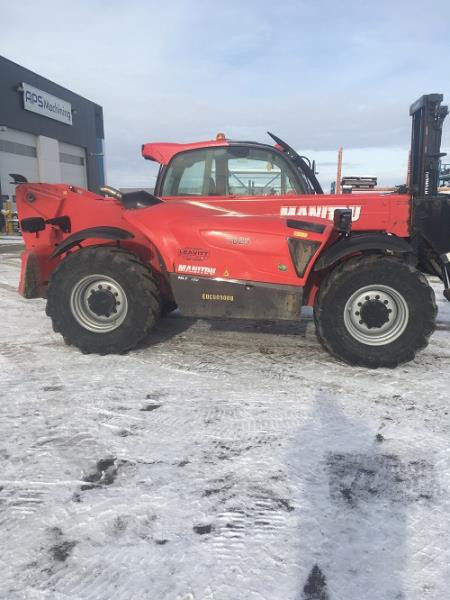
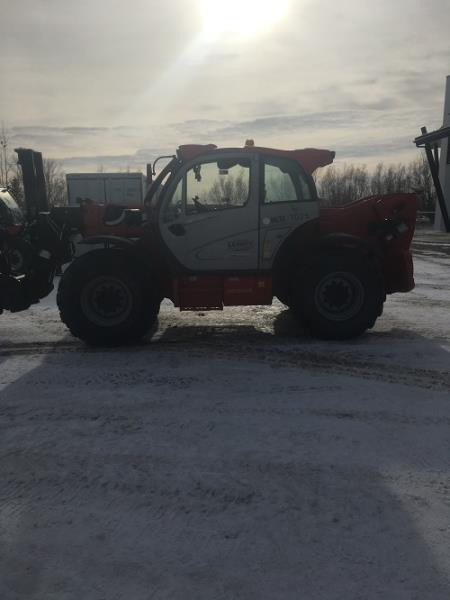
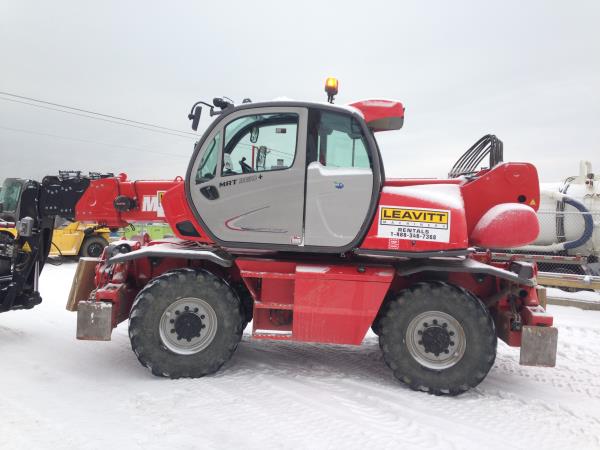
CAT: CAT Telescopic Forklifts Montana - A telehandler or a telescopic handler is a machinery that is well-known in the construction and agriculture businesses. These machinery are similar in function and appearance to a lift truck or a forklift but are really more like a crane instead of a forklift. The telehandler provides improved versatility of a single telescopic boom that could extend forwards and upwards from the vehicle. The operator could connect many attachments on the boom's end. Several of the most popular attachments include: a muck grab, a bucket, pallet forks or a lift table. To be able to transport cargo through locations which are normally unreachable for a conventional forklift. The telehandler uses pallet forks as their most common attachment. For instance, telehandlers can transport cargo to and from places that are not typically accessible by regular forklift models. These devices also have the ability to remove palletized loads from inside a trailer and place these loads in high places, such as on rooftops for instance. Previously, this situation mentioned above would need a crane. Cranes could be pricey to use and not always a time-efficient or practical alternative. Telehandler's are unique in that their advantage is also their largest drawback: because the boom raises or extends when the machine is bearing a load, it also acts as a lever and causes the vehicle to become quite unstable, even with the counterweights on the back. This translates to the lifting capacity decreasing fast as the working radius increases. The working radius is the distance between the center of the load and the front of the wheels. Like for example, a vehicle which has a 5000 pound capacity with the boom retracted may be able to safely lift only as much as 400 lb. once it is fully extended with a low boom angle. The same model with a 5000 lb. lift capacity that has the boom retracted might be able to easily support as much as 10,000 lb. with the boom raised up to 70. The Matbro Company in Horley, Surrey, England initially pioneered telehandlers. These equipment were developed from their articulated cross country forestry forklifts. Initially, they had a centrally mounted boom design on the front section. This placed the cab of the driver on the back portion of the machine, like in the Teleram 40 model. The rigid chassis design with a rear mounted boom and the cab situated on the side has since become more popular.
Skyjack: Skyjack Aerial Work Platforms Lifts Montana - SJ 40T & SJ 45T Skyjack offers top-of-the-line product designs that are innovative and effective. They offer the lowest life cycle costs and the overall best available value with their easy to use and dependable machines. The SJ 40T along with the SJ 45T boom lifts follow these philosophies. They feature proven design standards like their analog based controls and Skyjack's color coded numbered wiring system. SJ 61T & SJ 66T By adding the new models the SJ 61T and the SJ 66T to the existing SJ 45T and SJ 40T boom lift lines, Skyjack continues to expand their product base. These new models were built with the high quality design standards and philosophies that the company is known for. The company provides an exclusive axle based 4-wheel drive system that offers a "Detroit Locker" limited slip rear differential and front differential. These machines continue to provide easy serviceability, reduced life cycle expenses, and proven dependability. Skyjack Reconditioning SJ-Recon is responsible for fully reconditioning both Skyjack brand Rough Terrain and Electric Scissors as well as many various boom lift models from a variety of OEMs Skyjack Corporation. Reconditioning Process Each and every equipment has been thoroughly checked with all safety bulletins and outstanding updates completed prior to disassembly. before being carefully prepped for painting, all weldments are closely checked for any defects. The Recon Division at Skyjack has all the needed equipment to perform a professional, high quality paint job. They provide a complete paint line and oven and a state of the art blasting booth. Every Skyjack machine is carefully reassembled in order to meet original OEM standards. The following components are replaced with brand new parts: filters and hoses, the hydraulic fluids, 110V outlet, joystick controllers and the main control and main electrical cables. In addition, every unit receives new batteries, tires and bushings and battery cables and worn pins are replaced.
Fantuzzi: Fantuzzi Container Handlers Montana - Side Loader Light Range Fantuzzi offers 4 tonne and 3 tonne units that are made to run on liquid propane gas, diesel or electric fuel sources. These units are made with a standard 4.5 m mast, with no loss of capacity when completely extended, and a standard deck height of 800mm. They also come with a formed chassis for amazing durability and strength, joystick control and a fully heated cabin. Fantuzzi provides clients with confidant equipment which can withstand the most challenging settings. Side Loader Medium Range The 5-6 tonne medium range sideloaders are also capable of running off LPG, diesel or electric fuel sources. These types of machines are engineered with a standard 4.5 m mast and a deck height of 1000 mm. There is no loss capacity when the mast is extended at full height. The formed chassis provides optimum strength and the joystick control and fully heated cabin are some of the extra standard features. Fantuzzi specializes in the making of large scale heavy-duty side loaders. The shape and size of the unit would meet the requirements of your particular operation. Regardless whether you are handling large concrete sections, steel plates or coils, these machines could deal with the mass and the weight. Contact us if you are handling something exclusive on the jobsite and we could build the unit to meet your particular needs. For instance, well widths, engine type, cab position, deck widths, heat protection and chassis widths are factors that can all be modified to meet all your work place requirements. In addition, we could select specific tires and the transmission type in order to modify your preferences. Sideloader - In the broad material handling business, there is a vast variety of engine powered side-loaders which provide capacities from 3000 kilograms to 6000 kilograms. These models provide the perfect solution for handling loads that are wide or long loads like for instance steel plates, pipes, timber packs or different other loads of similar dimensions. With the forks reaching out sideways, the sideloader is designed to handle the loads, and to store and retrieve long loads situated within the aisles. Most of the aisles are a bit more than the width of the equipment itself. This is actually the best way to maximize space and efficiency in a tight warehouse application. The sideloaders could deliver a high performance and offering exceptional control and outstanding precision. A lot of units are equipped with a strong high-torque diesel engine. The cabin is an all-weather cabin which is ergonomically designed with operator comfort in mind. The operator would work in complete comfort, in a safe environment, no matter the weather or environmental conditions. These carefully engineered cabs are built to help ensure optimum production. The cabin is situated in an optimal position in order to ensure perfect maneuverability and load control in close surroundings. A generous glass area is situated on the rear, sides, top, rear and front to maintain superior visibility for the driver all the time.
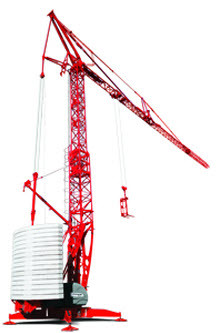
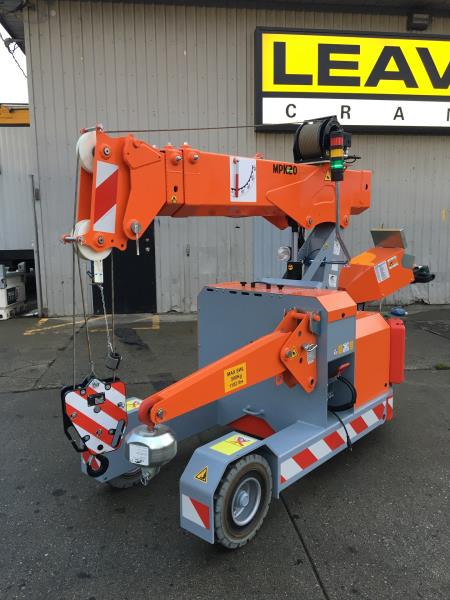
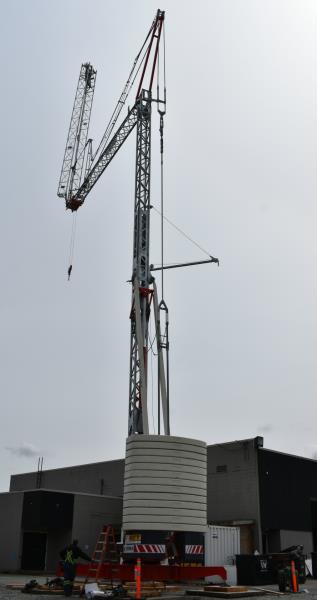
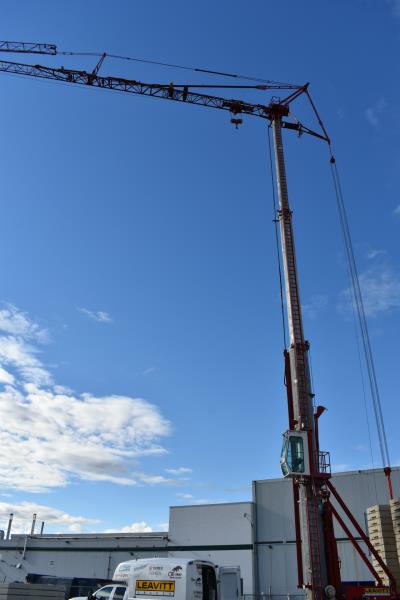
Wolff: Wolff Cranes Montana - The Evolution into Hydraulics The beginning of WWII forced society to become more resourceful in general. Even if the development and design of cranes has changed significantly, in this particular time these machinery progressed greatly. These industrial equipments changed the face of the construction business. The first hydraulic crane was built in 1946 by crane company F. Taylor & Sons. This first unit was not able to luff or slew and was just utilized by the company. When it joined with Coles during the year 1959, this model opened up the doors for a 42 and 50 Series. A Morris W.D. chassis is what the mobile hydraulic crane was initially placed on. The hydraulic crane by Taylor & Sons operated on a boom powered by a hydraulic pump and cylinders that were lifted and lowered by a hydraulic pump. When the business was not able to use army vehicles as chassis for the machine, they started production for designing their own mobile hydraulic cranes. The 1950s offered cranes which were heralded as incredible machinery which were capable of rebuilding what bombs dropped in the war had ruined. The cranes were responsible for helping put together cities, countries and individual homes. Hydraulic systems became designed more and more complex. The gear and pump systems could be powered while the trucks remained immobile. Companies such as Hydrauliska Instustri AB made the very first truck loader crane appearance offered on the market. The A2 crane was introduced during the year 1952. This model was mounted directly to the rear of a Chevy truck. It was complete with a hooked winch and hydraulic lifting cylinders. This loader crane started a huge trend in the industry. A company located within Bremen, called Atlas Weyhausen started producing similar versions of this particular machinery. Cranes immediately after the war were becoming more advanced. Various businesses and manufacturers making the winches developed accurate telescopic booms, and the hydraulic pumps were improved and utilizing different materials in order to change the way the crane was developed.
Komatsu: Komatsu Cushion Tire Forklifts Montana - Forklift Controls In any warehouse environment, among the most common machines is a forklift or lift truck. These versatile machinery consist of a vehicle along with two split forks at the front that are capable of transporting and carrying heavy things. Forklifts are able to maneuver in small spaces and capable of lifting things into up high, hard to reach places. Forklifts are still really dangerous machinery and must be utilized in a safe manner at all times, after proper training and certification has taken place. When new to a forklift, take time to read the owner's guidebook and be familiar with the controls. Be sure to take note of the location of every particular control and what specific feature it functions. The majority of lift trucks have two levers that control the forks. The first lever controls the height of the fork. In order to make the forks go down, you push the lever forward. To move the forks upwards, you simply pull back on the lever. There is another lever which controls the forks tilt. This tilting capability allows for better weight distribution. This tilting action helps to keep things stable and won't allow objects to fall off while driving. Moreover, it helps items slide off in a more balanced way when unloading. By pulling the second lever back, the forks would tilt back, when pushing the lever forward would tilt the forks forward. Some kinds of forklifts are equipped with a third lever which controls the width of the forks. Each one of these levers is located just to the right of the operator's seat. Inexperienced drivers must take advantage of qualified coworkers who could go over the controls with them. Be sure to do this when the forklift is turned off and not operational. Ask the qualified professional if you have any questions about how something functions. Watch how the coworker demonstrates the function of each of the controls. Observation is usually the best way to learn a new skill. On hydrostatic lift trucks, notice that to be able to make the equipment go, you use the gas. And if you would like to make it stop, you simply release the gas pedal. There is no brake on these kinds of lift trucks. There are several kinds of hydrostatic forklifts which are equipped with battery powered engines which turn off when the gas pedal is released. They start up once the gas pedal is pushed again.
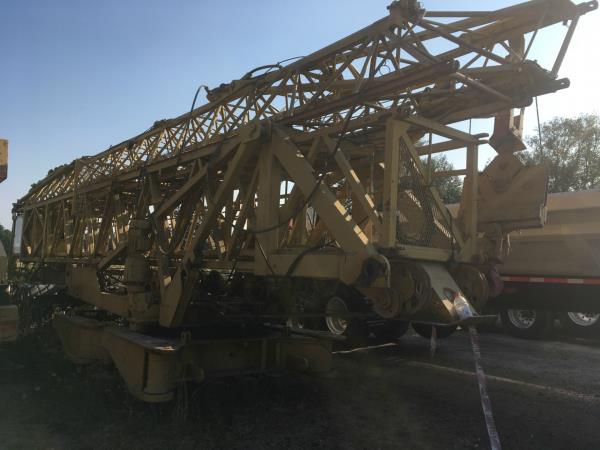
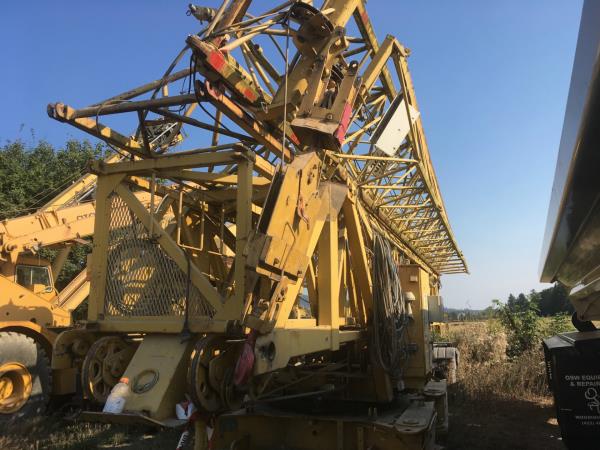
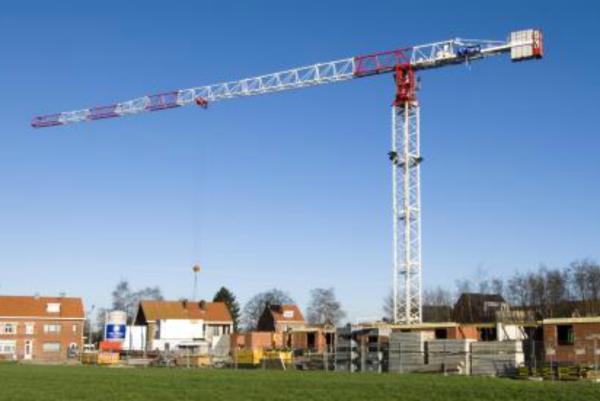
Pecco: Pecco Construction Cranes Montana - Types of Hydraulic Cranes Hydraulic cranes are one of the most commonly used kinds of crane in the construction business. They are utilized to make everything from freeway overpasses and roadways to skyscrapers and buildings. Cranes come in a wide variety of models, styles and sizes. These various units allow both the owner and operators to execute many more functions within their industry. Choosing the right kind of crane is very crucial for making certain that the material could be efficiently and safely transported to the place it needs to get to in order for the construction process to begin. Truck Cranes Truck cranes would typically have 2 different cabs. One cab is utilized to drive the truck unit when in transport mode, while the other is for controlling the crane. These cranes are very helpful for building sites where a crane is required in many different locations for the duration of the build. This is because of the fact that the crane is capable of being easily driven from one place to another. Moreover, the cranes could be transported to different construction sites on the road since they can drive themselves and this eliminates the need for extra transport vehicles. Being able to travel on their own greatly reduces transport expenses at the end of the day. One drawback of a truck crane is that it is not stable enough sitting on tires alone in order to be able to lift the major loads that a hydraulic crane can handle. Thus, so as to fix this issue, outriggers could be extended from the deck. The outriggers use hydraulic pressure in order to lift the truck slightly off of the ground, making it stable and balanced. Crawler-Mounted Cranes The crawler crane is unique in that it has huge tracks on the base of the crane. These massive tracks are really similar to bulldozers and backhoes. The tracks allow the crane to move around a construction locations successfully.
Omega: Omega Rough Terrain Forklifts Montana - MEGA Series - Each and every Mega Series forklift is a powerful and robust equipment able to deal with a wide range of outdoor applications. This series is made to function in a dependable manner, able to raise limber, steel and other supplies as much as 9100 kilograms. The MEGA Series has 1220 mm load centres and its robust mast and frame design enable it to handle super heavy loads. If you have a unique or heavy cargo to move, this is the equipment you should utilize. HERC Series - The HERC Series is available in capacities with a 610 mm and 11350 kilograms to 22700 kilograms capacity with a 1220 mm load centre. This specific series comes in a variety of steering configurations such as 4-wheel drive, 2-wheel steer and 4-wheel steer. The HERC has carved a unique niche in the industry by combining full time all-terrain capabilities with supreme heavy-duty load lifting alternatives. 44236 Series - The Omega Lift 44236 Series is offered with standard 4-wheel steer and 4-wheel drive. This series is a heavy duty all terrain forklift. These equipment excel in the construction business due to their durable build and high ground clearance. This series is employed usually for construction or yard work. Regardless of what applications you require this versatile and power-packed forklift would finish the difficulties of any job. 2X Series - All equipment within the 2X Series have been built based on the stringent standards utilized on all Omega machinery. This series comes available in 2-wheel drive as well as 4-wheel drive options. The 2X Series from 2750 to 6350 kilograms. This versatile lift truck is offered with 2-wheel steering capacity and has a variety of mast and carriage sizes to deal with any rough terrain options or construction situations in an efficient and easy manner. ALPHA Series - The ALPHA Series equipment by Omega provide extreme strength and durability provided by the largest of Omega lift trucks packaged in more efficient and compact machinery. The fantastic maneuverability of this 4-wheel steer, 4-wheel drive unit allows it to be well suitable for certain applications where space is really limited. UG Series - Omega's UG Series lifts include purpose-built all-terrain lift trucks engineered to suit the numerous stringent military and mining needs. The UG Series deals with the intense environment of in-theatre military operations and different mining application. This specialized series will perform great in difficult conditions.
Terex: Terex Reach Stackers Montana - The Terex Reach Stackers are very economical when in operation, with thoroughly designed and engineered units that can meet the requirements of a diverse base of clients. The Reach Stacker series is more flexible compared to a Standard Lift Truck. The series has become very popular within the container handling industry all around the world. These equipment live up to the high expectations of reliability, excellent build quality and robustness. Terex has a UK-based parts and service support group in addition to a technical department to support the whole array of Terex Reach Stackers. If you have any concerns or questions about service or sales, please don't hesitate to get in touch with them. A highly-trained professional would be pleased to steer you in the right direction regarding any problems you might have or facilitate the shipping of your new parts. Terex Reach Stacker Advantages: There are numerous benefits to the Terex Reach Stacker machines. Like for example, they are the ideal solution for combination scenarios like port and rail terminals. These models are known for their ability to stack containers effectively. Higher storage capacity and higher stacking capacity are part of the popularity of these equipment in addition to selective block stacking abilities. Moreover, these containers could be rotated ad handled "end on." Terex Empty Reach Stacker The Empty Reach Stacker by Fantuzzi provides a perfect option for rail head container application needs. It is also a great alternative when doorways have to be negotiated for workshop repairs or containers need to be rotated. Along with empty reach stackers, Terex is also the manufacturer of various kinds of empty container handling lift trucks. The business has worked really hard to earn a solid reputation of being amongst the forefront company`s in the material handling business. No matter what part of the Fantuzzi series you are using, the corporation provides an excellent UK based service and parts support group. They are also on board with all technical support their equipment require as well. If you are in the need of some industrial machine for your operation, be certain to check out the Fantuzzi range. There are numerous units available. To be able to find out if Terex has the material handling solutions you need available, do not hesitate to call your local dealer to be able to find out first-hand what units might be right for your specific application.
Genie: Genie Telescopic Forklift Montana - Genie Compact Telehandlers The right alternative for all various kinds of tasks of any size is the Genie compact telehandlers. These models are easy to maneuver and simple to service. These models are available with the option for a lot of rugged attachments. Genie compact telehandlers meet the needs of the majority of masonry, construction, landscape and farming applications. Telehandler's by Genie provide a low stowed height and a compact footprint. Also, these equipment have been known for how simple they are to transport. They provide 3 selectable steering modes: front-wheel, coordinated and crab steer. The common components for efficient maintenance are interchangeable. The no-tool access to every day inspection points is also another excellent feature. These are several of the features which have propelled Genie telehandlers to become a leader in their class. Genie High-Reach Telehandlers The high-reach telehandler models made by Genie offer awesome lift capacity and could easily complete any of your worksite requirements. There are 2 different models of these specific telehandlers available. These machinery are well suited to deal with masonry and the new construction of multi-story buildings too. There are powerful features provided on these units including a 4-wheel drive and turbocharged diesel engine, provide superb performance in even the toughest situations. Regardless of the application, there is a Genie unit capable of fulfilling all your requirements. Genie's telehandlers have been utilized in lots of construction, agriculture and landscaping industry applications for heavy duty lifting. They are well suited for worksite clean-up, as well as being great for moving and placing things as well as unloading and loading supplies. These machines feature 4-wheel steering to be able to maneuver rough terrain safely and steering for hills. As well, the models offer low-end torque. The Genie high-reach telehandlers can handle all of your jobsite needs and provide amazing lift capacity. Powerful features include 4-wheel drive like a turbocharged diesel engine that offers excellent communication in tough situations.
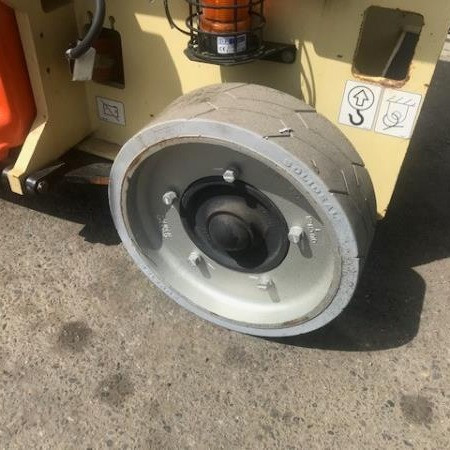
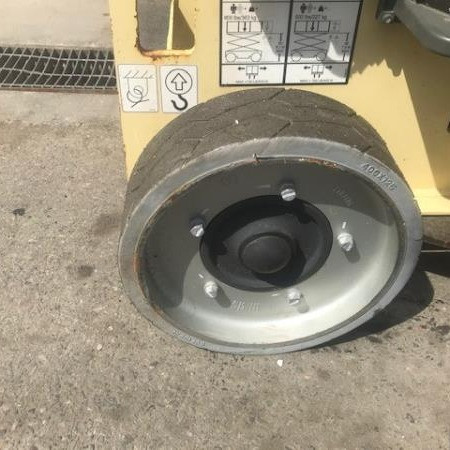
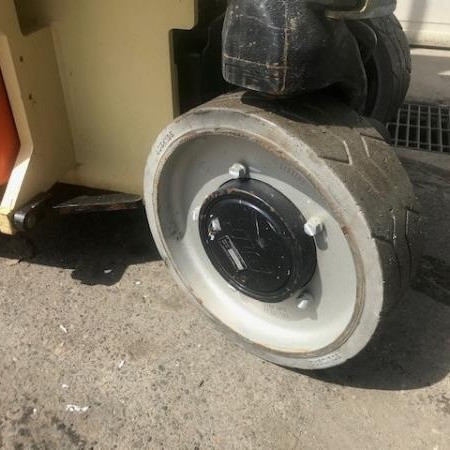
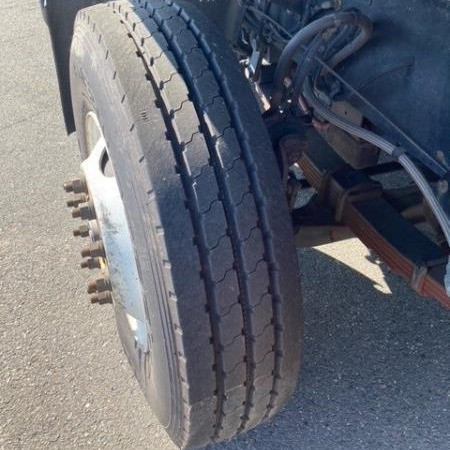
Nissan: Nissan Pneumatic Tire Forklift Montana - What is the Distinction between Cushion Tire and Pneumatic Tire? One of the most popular questions regarding this type of machine is determining the difference between pneumatic tire forklifts and cushion tire forklifts. Each and every kind of tire is specially suited for various needs. Pneumatic Tires have air in them, similar to vehicle tires. These kinds of tires are great for indoor use but they are more useful in outdoor "yard" applications and on gravel and uneven surfaces. Cushion tires are designed as a solid industrial tire that is utilized mainly for indoor applications. These tires could be used outdoors on just asphalt surfaces. If you do drive cushion tires outdoors, there is an alternative to get traction tires on the front of the machinery. These are known as the drive tires. The back tires or the steer tires are particularly designed for steering. Traction tires located on the forklift's back will simply wear out quicker. Therefore, if you do have to work outdoors, having the smooth tires on the back and traction on the front will be the safest and most economical way to operate. What is the distinction between Air Pneumatic and Solid Pneumatic tires? It could be quite difficult when trying to determine the main distinction between the two kinds of tires. They would operate well in both in gravel and asphalt situations. The main difference between the two tire types is solid pneumatics are made of solid rubber. This means you cannot pop, gouge and puncture them since they are strong. These tires are more expensive than air pneumatic tires since they are made up of way more rubber. These types of tires are best suited for locations like lumber yards and scrap yards where there can be a lot of debris or sharp things on the ground. Air pneumatic tires are able to be punctured accidentally. When this happens, you can get flat tires from them. Before operating a forklift with air pneumatic tires, check your work space and be sure that the yard is free of nails, scrap debris and sharp metals. In most applications, standard air pneumatic tires work great.